The Gauntlet of Guardians: Destiny 2's Most Brutal and Bewildering Raid Bosses
Discover the ultimate Destiny 2 raid bosses, from Crota to Oryx, that challenge coordination and will. These epic encounters demand flawless execution and teamwork under pressure.
For over a decade, the world of Destiny has been defined by its climactic, communal trials—the raids. These six-player gauntlets are the ultimate test of coordination, communication, and sheer will. While every raid offers a unique journey, they all converge on a singular truth: the boss fight. These encounters are where legends are forged and fireteams are broken. Across the stars, from the shattered ruins of the Black Garden to the metaphysical heart of the Traveler, certain adversaries stand out not just for their power, but for the labyrinthine mechanics and profound frustration they inflict upon even the most seasoned Guardians. These are the fights where a single misstep is like a crack in a pane of stained glass, radiating failure through the entire team until the beautiful picture shatters into a million irreparable pieces.
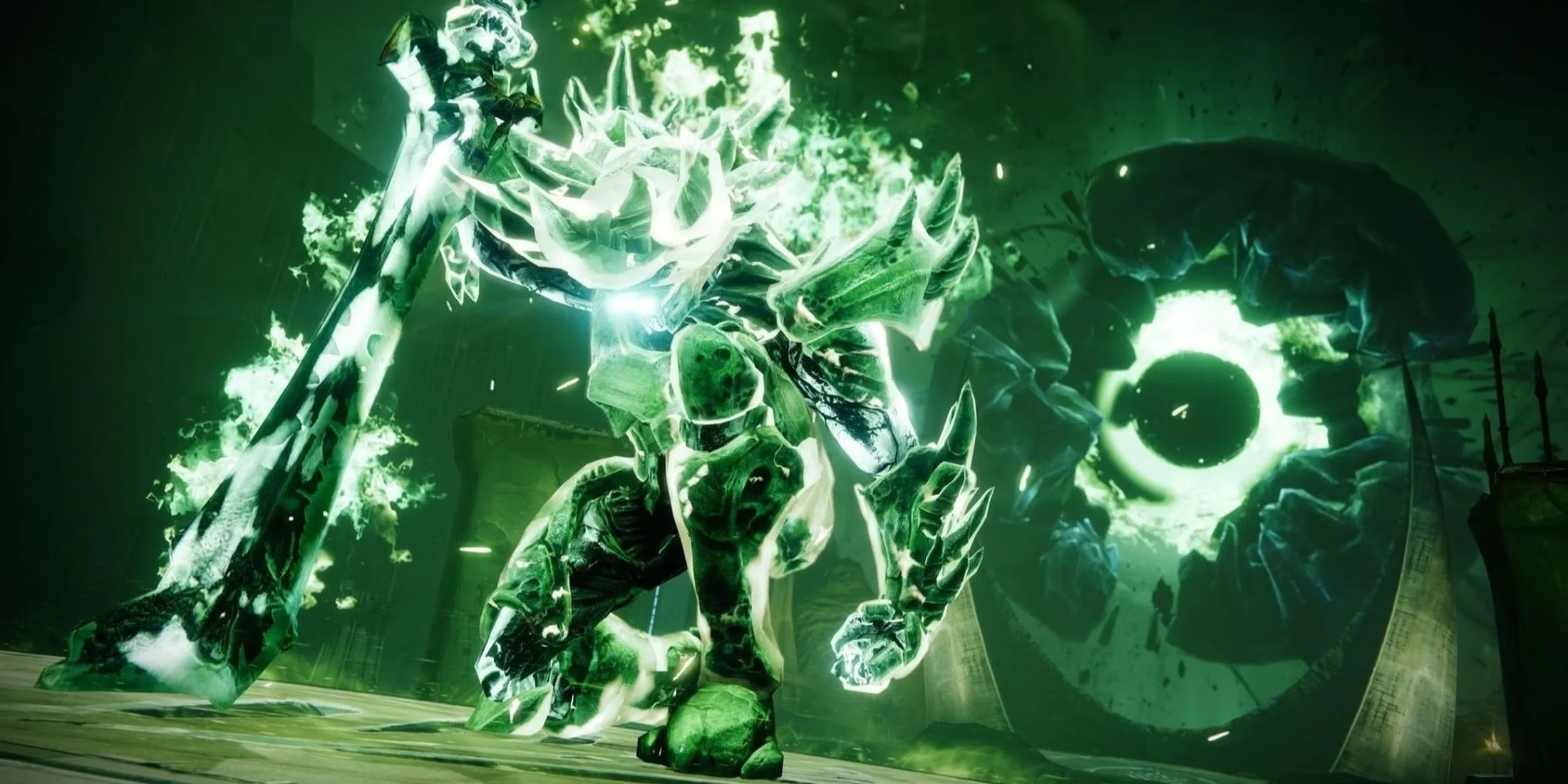
Crota, Son of Oryx returned not as a nostalgic victory lap, but as a brutal reintroduction. Veterans of the original Destiny expected a simple dance of rockets and swords. Instead, they found a complex ritual of buff-passing, enemy prioritization, and environmental destruction. The fight demands every player be an active, cogent participant; one Guardian fumbling the pass is like dropping the baton in a relay race run across a minefield, dooming the entire team. The mechanics are a dense, unforgiving checklist executed under pressure, making it a notorious hurdle for teaching newcomers.
Oryx, The Taken King elevated this concept. His reprised fight is a symphony of simultaneous tasks where a single note out of tune spells disaster. Controlling plates, slaying knights, detonating bombs, and surviving a cataclysmic blast are all standard fare. The true chaos comes from the random "Taken" possession, forcing a designated player into a solitary parkour challenge while the rest of the team holds the line. Success hinges not on individual knowledge, but on the synchronized execution of six minds operating as one perfect, fragile machine.
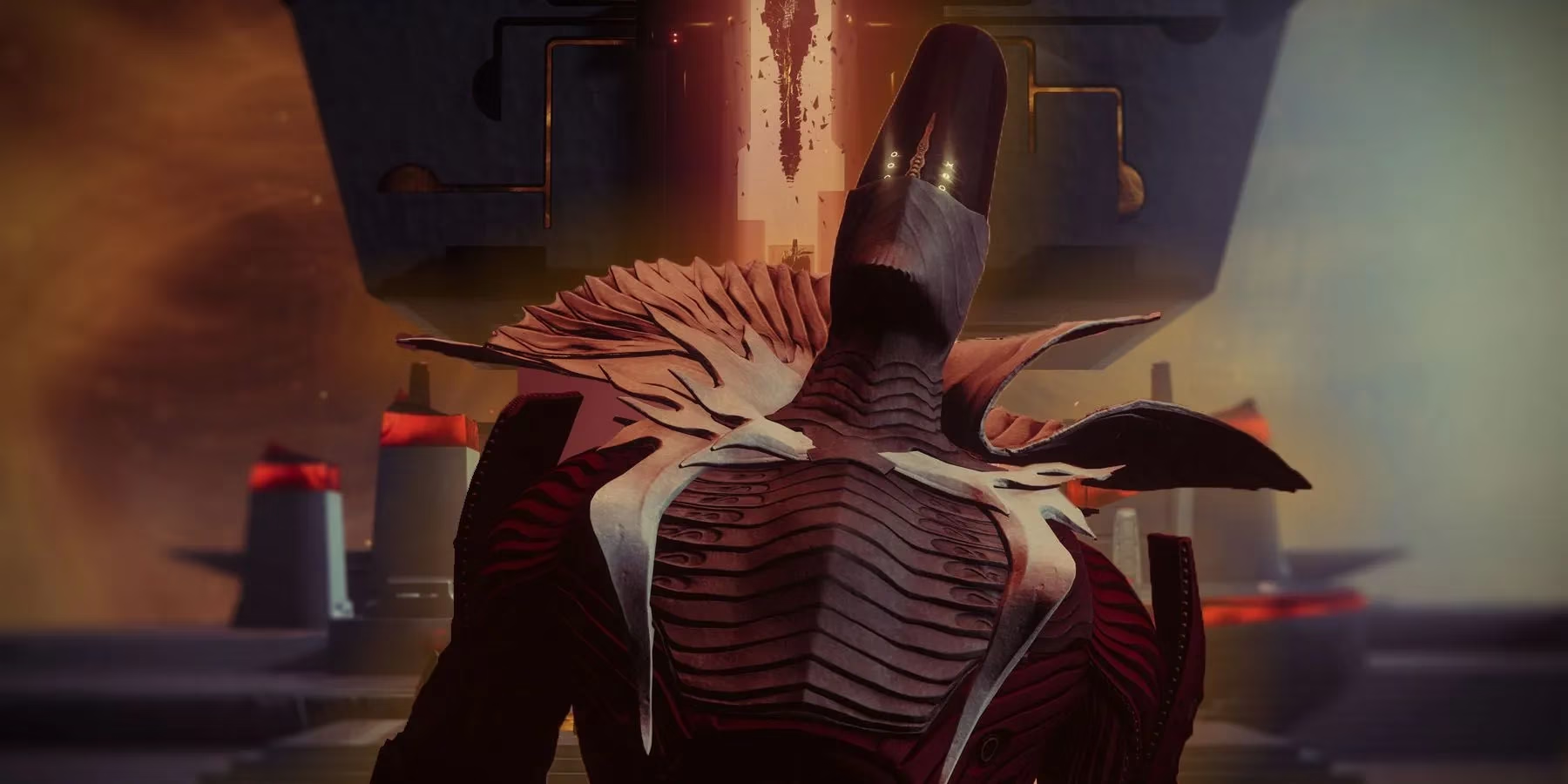
Rhulk, Disciple of The Witness redefined the final boss arena. Gone were the static phases; in their place was a hypermobile, kick-happy deity on a floating platform. Damaging him requires first mastering the raid's esoteric language of symbols, demanding quick, accurate call-outs. Teams have only three precious attempts to correctly distribute buffs before the encounter soft-locks, forcing a restart. Rhulk is a test of compressed perfection under relentless assault, where his debuffing attacks swarm a team like a cloud of corrosive nanites, eating away at their chances with every passing second.
If Rhulk tests precision under pressure, the Garden of Salvation tests the very limits of team logistics and patience. Its first boss, the Consecrated Mind, Sol Inherent, is an exercise in bifurcated focus. One team must defend a totem from a relentless Vex drain, a task as Sisyphean as trying to bail out a boat with a thimble, while the other chases the boss to collect its volatile essence. Communication becomes a cacophony of overlapping directives, all to reach a damage phase where the boss simply retreats, demanding sustained damage on the move.
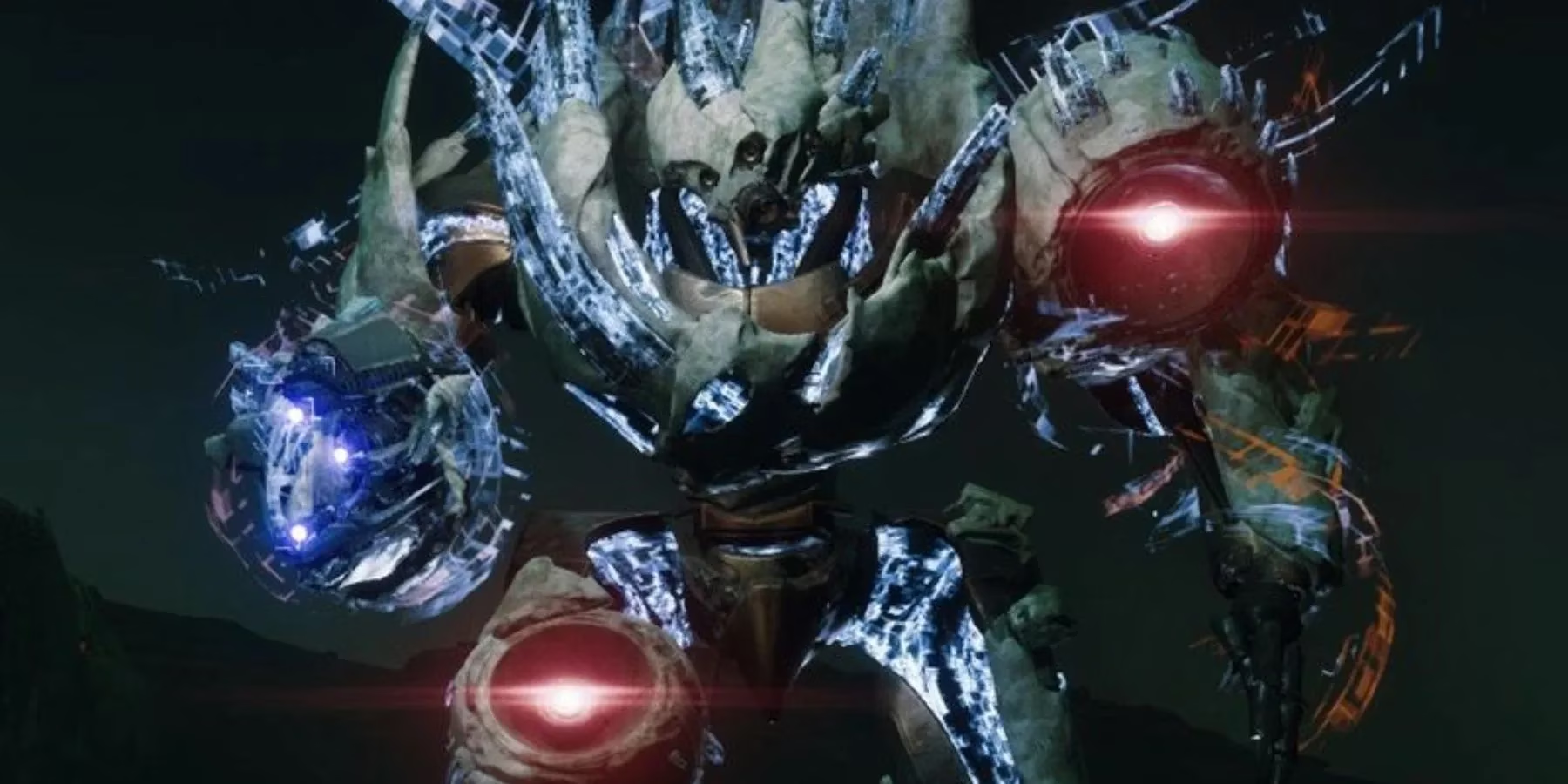
But the Garden saves its true nightmare for the end. The Sanctified Mind, Sol Inherent is a masterpiece of controlled chaos. It combines mote collection with a tethering system that links Guardians with lasers to build platforms and stun the boss. In theory, elegant. In practice, it's a glitch-prone pandemonium where tethers latch onto the wrong player, floors dissolve into damaging pools, and motes vanish through the geometry. It is, perhaps, the most frustrating encounter to teach, as its simple components combust into an unpredictable storm where execution feels less like strategy and more like herding cats through a hall of mirrors.
Not all difficulty comes from length or chaos, however. Zo'aurc, Explicator of Planets from the Root of Nightmares raid is a stark anomaly. In a raid known for its accessibility, this planetary puzzle boss stands as a brutal gatekeeper. The mechanic—swapping floating planets between plates—sounds simple. Yet, it often devolves into miscommunication and frustration so intense it can dissolve a pickup group on the spot. The act of swapping these celestial orbs back and forth under pressure becomes a psychic chess match played on four separate, frantic boards.
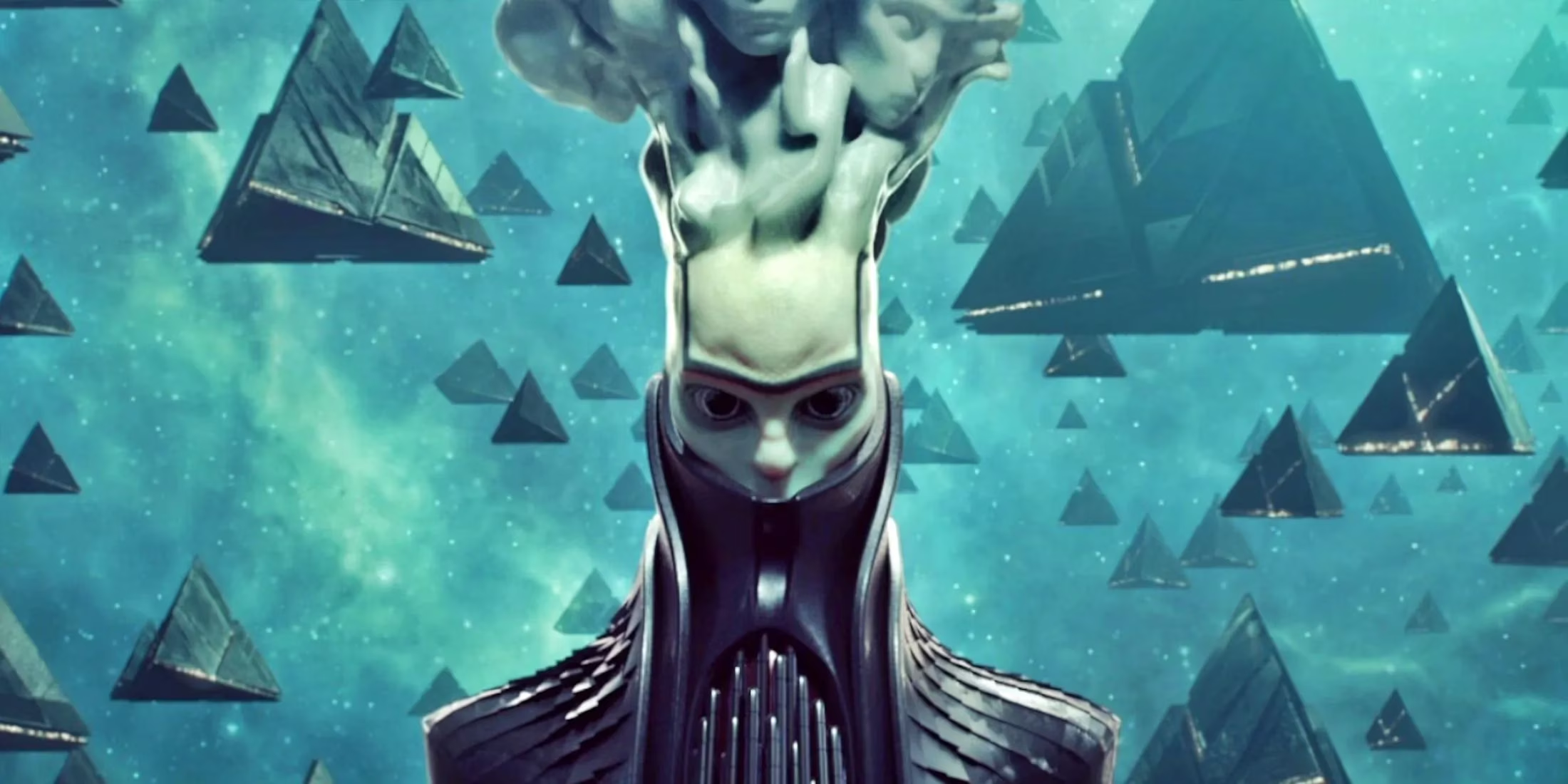
Then there is The Witness, the final architect of the Light and Darkness saga. This being is a spectacle of overwhelming scale, with arms erupting from reality itself. The fight is a sensory overload of colors, shapes, and glowing glyphs. Players must decode this visual cacophony to match buffs to the correct arm, survive instant-wipe mechanics, and finally, unleash their fury on a platform under constant apocalyptic assault. It is the ultimate test of a team's organizational fortitude, demanding perfect role clarity amid what looks like a cosmic kaleidoscope exploding.
Yet, for many, the pinnacle of legitimate, bewildering difficulty remains Riven of a Thousand Voices. To this day, most victories are achieved via a brute-force "cheese." Doing it legitimately is a dizzying ballet of split teams, hidden symbols, and ocular callouts. One team reads symbols while the other provokes the beast, all to identify which of Riven's many eyes to shoot. The process repeats in a different configuration, a multi-layered puzzle where information must flow perfectly across two isolated rooms. On paper, it's a Rube Goldberg machine of an encounter. In practice, when attempted as designed, it stands as perhaps the most complex and demanding mechanical puzzle ever deployed against the Guardians. It is the ghost in the raid machine, a legend of difficulty that most have heard but few have truly conquered.
Comments