Root of Nightmares Raid Now Features Master Difficulty and Adept Weapons in Destiny 2
Destiny 2 Root of Nightmares Master raid offers challenging mechanics and coveted Adept weapon rewards for dedicated Guardians.
The Root of Nightmares raid, introduced with Destiny 2's Lightfall expansion, has evolved into a staple for Guardians seeking a balance of challenge and accessibility. By April 2023, Bungie had already released the Master difficulty variant, and as we look back in 2026, it remains a popular destination for those chasing Adept weapon patterns and the coveted Conditional Finality Exotic. Why has this raid endured? Perhaps because its mechanics, centered around linking Light and Darkness nodes, offer a satisfying puzzle-box experience without the punishing complexity of earlier raids like Vow of the Disciple. But with the Master difficulty and weekly challenge rotations, Root of Nightmares keeps drawing fireteams back.
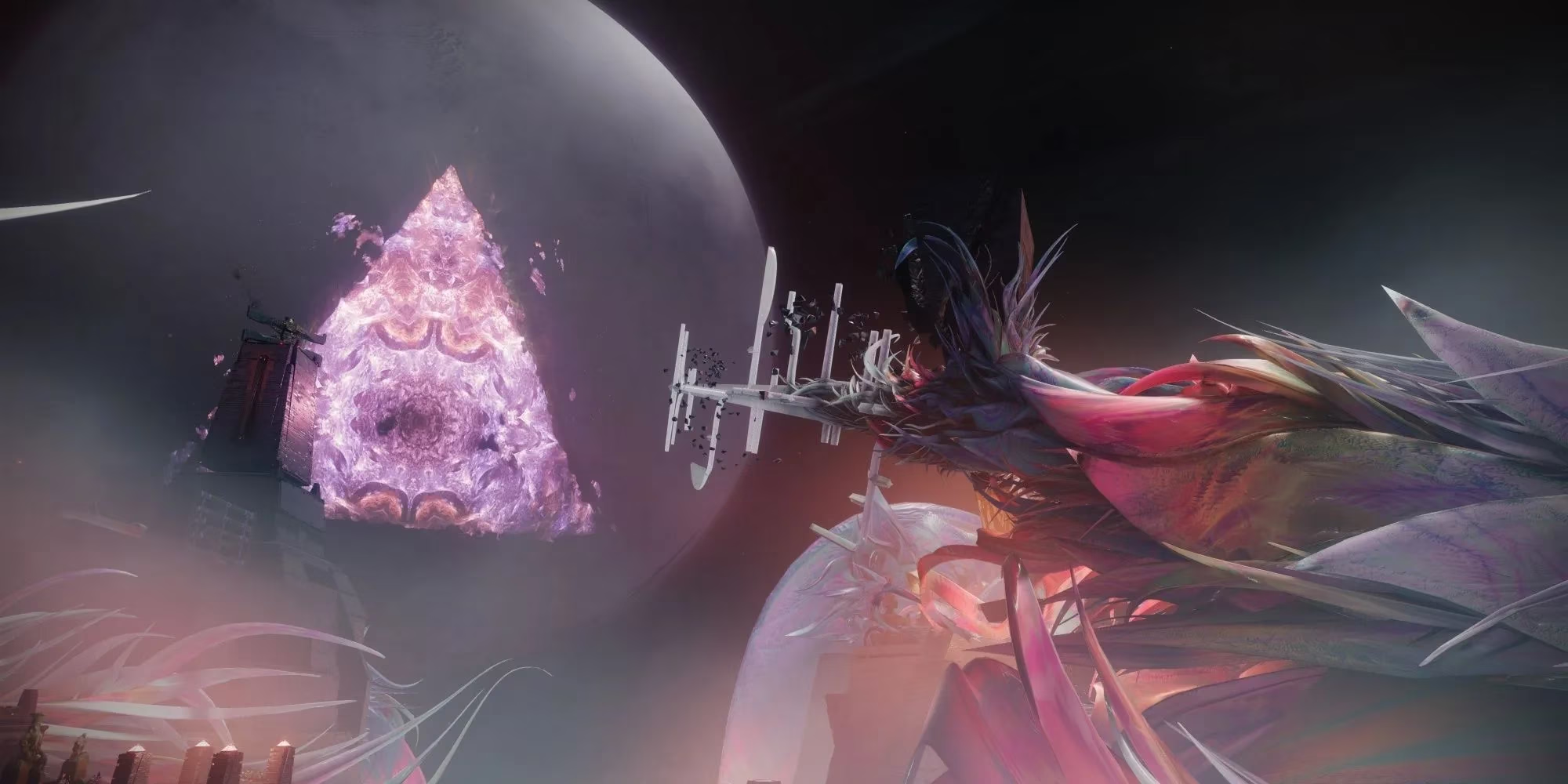
Master Difficulty Differences and Rewards
For those who thought the Normal version was too easy, Bungie cranked up the heat with Master difficulty. The power delta locks players at 20 levels below the enemies, forcing Guardians to rethink their strategies. Here is a quick comparison of the two modes:
| Aspect | Normal | Master |
|---|---|---|
| Power Level | 1,770 (+0 delta) | 1,840 (-20 delta) |
| Champions | Barrier only | Barrier & Unstoppable |
| Modifiers | None | Extra shields, Surges & Overcharge weapons |
Mechanically the encounters remain identical, but the increased enemy lethality means that team coordination is more crucial than ever. The real lure, however, lies in the loot. Completing encounters on Master grants Adept weapons, which come with an Adept mod slot and bonus stats when Masterworked. Unlike some earlier Adept offerings, these weapons can be converted into Deepsight variants, allowing Guardians to enhance the barrel, magazine, and traits at the Enclave—though the actual perks cannot be changed. Weekly challenges on Master also guarantee Adept drops and boost the drop chance of the Exotic shotgun Conditional Finality.

Recommended Loadouts for Master
When facing Barrier Colossi and Unstoppable Incendiors, a well-rounded loadout is essential. For Hunters, Nightstalker with Gyrfalcon's Hauberk remains a top pick, providing invisibility loops and a powerful debuff with Shadowshot. Warlocks can choose between Dawnblade for Well of Radiance (indispensable for boss damage) or Shadebinder with Osmiomancy Gloves to lock down entire rooms. Titans should consider Berserker for its suspend capabilities or Sunbreaker with Loreley Splendor for near-immortality.
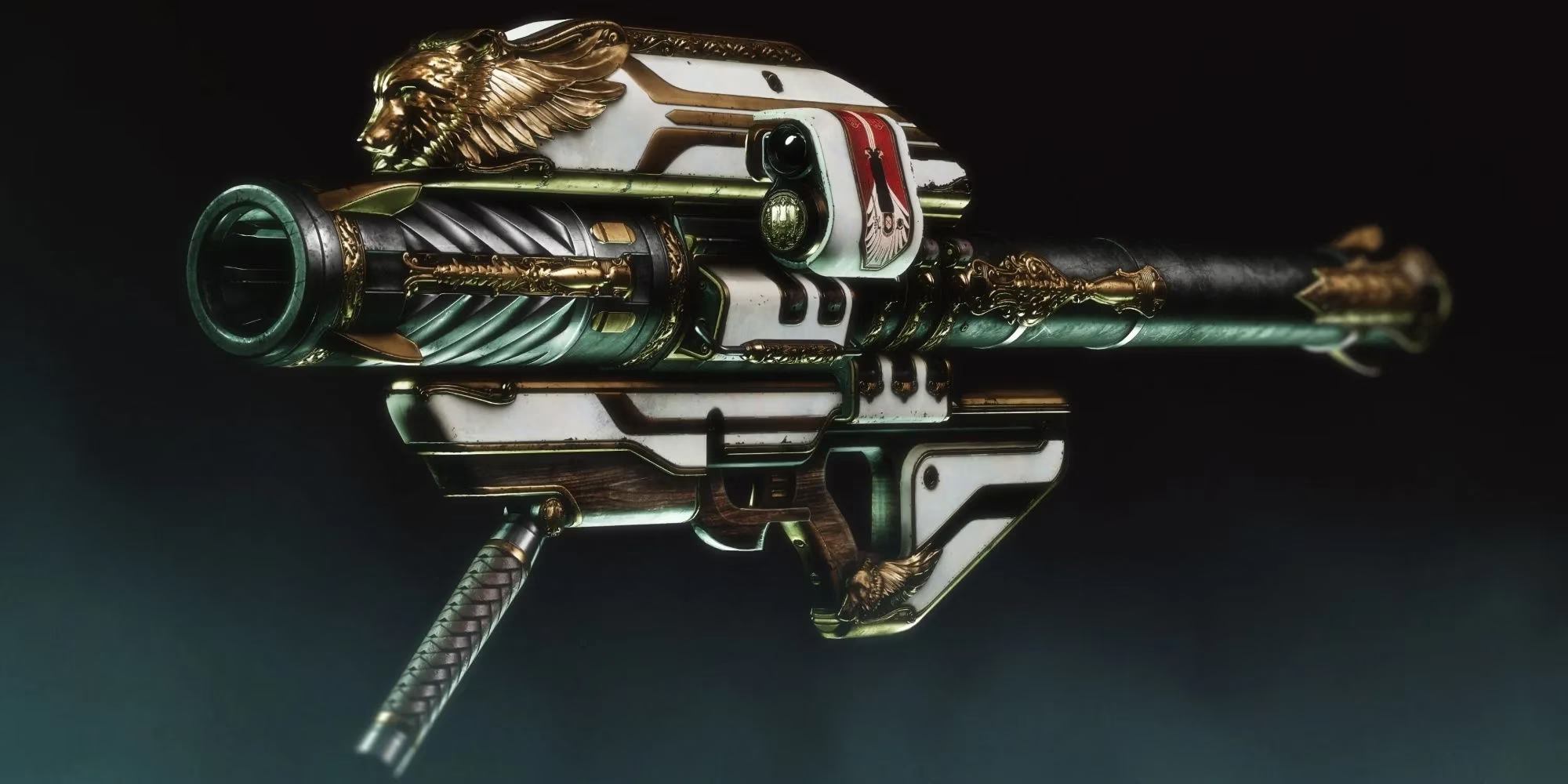
Weapon choices lean heavily toward add-clear and boss DPS. Witherhoard and Izanagi's Burden dominate the Kinetic slot, while Wave Frame Grenade Launchers like Forbearance or Trinity Ghoul can keep the combat fields clear. But what about heavy weapons? Rocket Launchers are the undisputed champions here—pair them with one Gjallarhorn user to buff the entire fireteam’s damage. If rockets aren't your thing, Linear Fusion Rifles like Sleeper Simulant or the crafted Retrofit Escapade Machine Gun can also perform admirably.
Hidden Chests and the Red Border Puzzle
Secret chests are a staple of Destiny raids, and Root of Nightmares features two traditional hidden chests plus one guaranteed red border chest. The two secret chests are located in the jumping sections—one after Cataclysm and the other during the nuclear jumping puzzle before the final boss. They can drop any previously acquired raid gear and raid-specific mods. The red border chest, however, requires solving a three-part puzzle across the entire raid. At the start, a wall of petals displays a sequence of Light and Dark orbs. Players must activate matching plates in hidden basement rooms to eventually spawn a chest at the end that always contains a Deepsight weapon. This weekly puzzle is a minor inconvenience for a guaranteed crafting pattern.
Encounter Highlights in Master Mode
The Cataclysm opening encounter tasks runners with activating plates using the Field of Light buff while the add-clear team kills Tormentors to extend the Sweeping Terror timer. Master throws in Barrier Colossi whenever a Tormentor spawns, adding pressure to an already hectic room.
Scission (the second encounter) splits the team across two sides, forcing runners to swap between Light and Darkness buffs to cleanse plates. The Redolence enemies can only be damaged while buffed, and Master mode adds Unstoppable Incendiors on the second and third floors. Coordination is key—many teams still debate whether two or four runners is the optimal strategy.
Macrocosm, the planet-shifting encounter, requires four players to identify the odd planet out and then shift it to the opposite side. After a second lieutenant phase, players interact with central plates to begin damage against Zo’aurc. Master replaces all plate Colossi with Barrier Champions, making it essential to have anti-barrier weapons ready.
Finally, Nezarec himself awaits. This encounter returns to the charge-all-six-nodes formula, but now with the added danger of Nezarec’s Hatred debuff. Taunting the boss by damaging his shoulders and chest keeps him off the runners, while Barrier Colossi spawn on each side. The DPS check is tight, and the wipe mechanic accelerates after the first phase, so speed and precision are paramount. Is it any wonder that fireteams still practice their node routes to perfection?
Conclusion
Whether you’re a veteran raider or a hopeful newcomer, Root of Nightmares on Master difficulty offers a rewarding challenge. The Adept weapons and increased Exotic drop rates are a strong incentive, and the raid’s elegant mechanics ensure it remains a favorite in 2026. So grab your Gjallarhorn, coordinate your plate runners, and dive back into the Pyramid ship. Nezarec isn’t going to slay himself.
Data referenced from Digital Foundry underscores why raids like Root of Nightmares stay in rotation for years: when enemy density spikes and ability spam meets a -20 Power delta, consistent frame pacing and clear visual readability become part of the difficulty curve, not just the spectacle. In practice, stable performance during champion-heavy waves and explosive DPS windows can make callouts, node chaining, and survival rotations feel more “skill-driven” than “screen-cluttered,” which helps Master mode remain appealing even after the novelty of Adept drops fades.
Comments