My Hilarious Journey Through Every Mainline Tales Of Game in 2025
Explore the best Tales of games with our definitive ranking of mainline JRPG titles—uncover nostalgia, drama, and epic adventures!
Let me tell you, diving back into the Tales of series feels like sifting through my old high school yearbook—some entries make me cringe with secondhand embarrassment, while others still make my heart do a victory flip. Back in the day, this whole saga started with a dramatic studio breakup that would put a soap opera to shame. Wolf Team had an internal meltdown, and the developers who stormed out formed tri-Ace (hello, Star Ocean!), leaving the rest to desperately shop around their baby, Tales of Phantasia. Namco finally said 'yes,' and thus began a JRPG partnership more enduring than my love for instant noodles. Fast forward to 2025, and we've got over 15 mainline games. I've bravely (or foolishly) taken it upon myself to rank every globally released mainline title. Remember, being lower on this list doesn't mean the game is a dumpster fire; it just means the ones above it are like finding an extra chicken nugget in your box—objectively better.
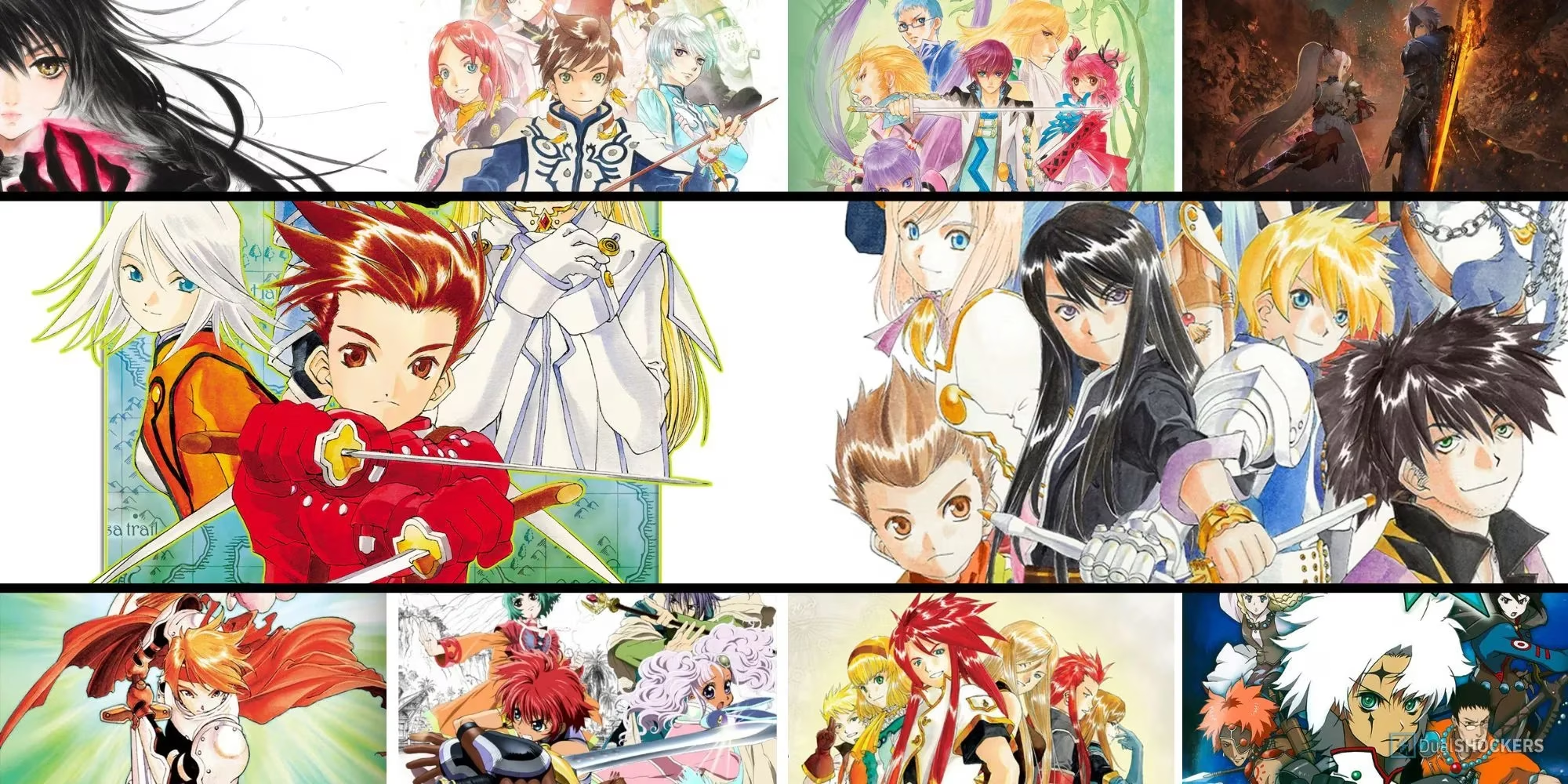
15 Tales of Symphonia: Dawn of the New World
An Unworthy Direct Sequel
This game is like getting a sequel to your favorite epic novel, only it's written in crayon by the author's moody cousin. Dawn of the New World isn't fundamentally broken, but asking it to follow the legendary Tales of Symphonia is like asking a toddler to perform heart surgery. We follow Emil, a kid who sees his parents get taken out by the previous game's hero, Lloyd. Cue the angst! Emil is so insecure and whiny that listening to him complain is like hearing a dial-up modem negotiate with a brick wall. His big gimmick? A Jekyll-and-Hyde act where he suddenly turns into a badass. This personality swap isn't cool; it's the narrative equivalent of a cop-out. The game undermines the original's beloved characters just to prop up its new, lackluster lead.
The combat tries to innovate with an Elemental Grid and a monster-catching system, which is about as fun as organizing a chaotic stamp collection. It's solid gameplay buried under a plot more far-fetched than my excuse for being late to work ('A dragon ate my alarm clock, I swear!').
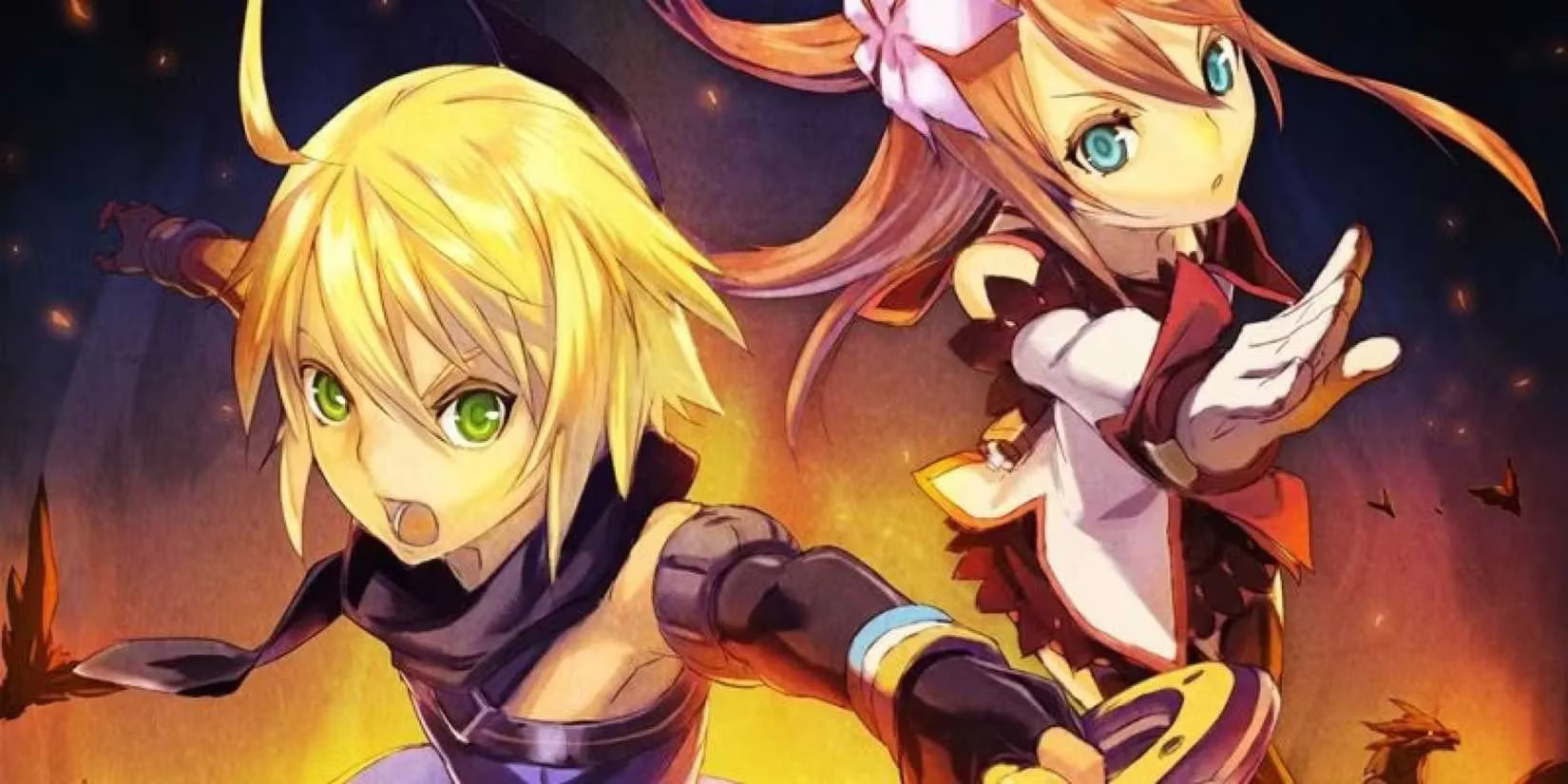
14 Tales of Legendia
Good Start, Half-Baked Finish
Tales of Legendia starts with a premise more intriguing than a mystery box: the entire world is a giant ship sailing on an endless ocean. Our hero, Senel, breaks the mold by using his fists instead of a sword—trading the classic Demon Fang for a Demon Fist. It's refreshing! The first half of the story hooks you like a catchy theme song. Then, the second half happens. The pacing grinds to a halt slower than a sloth running a marathon. Why? Because Namco thought the game was too short and stuffed it with backtracking and filler quests. It's like baking a beautiful cake and then dumping a bag of flour on top because you thought it needed more 'substance.'
The return to 2D side-scrolling battles feels nostalgic, but random encounters with enemies tougher than a week-old bagel make the already-slow narrative crawl feel eternal.

13 Tales of Hearts R
The Portable Entry
This was the series' big play for the PS Vita. The original Tales of Hearts was stuck in Japan, but Hearts R got a global release. We follow Kor Meteor, whose grandpa gets killed by emotion-eating monsters called Xeroms. His quest? To help his friend Kohaku recover her crystallized feelings scattered across the world. It's a plot more creative than my dreams, and the party's chemistry is top-notch.
The gameplay is fully 3D, letting you zip around the battlefield. Attacking sends you beelining toward enemies like a homing pigeon with a grudge. The cool addition is aerial combat—launching foes into the sky and juggling them with combos never gets old. There's also a skill tree for character development, which is always a welcome layer of customization.
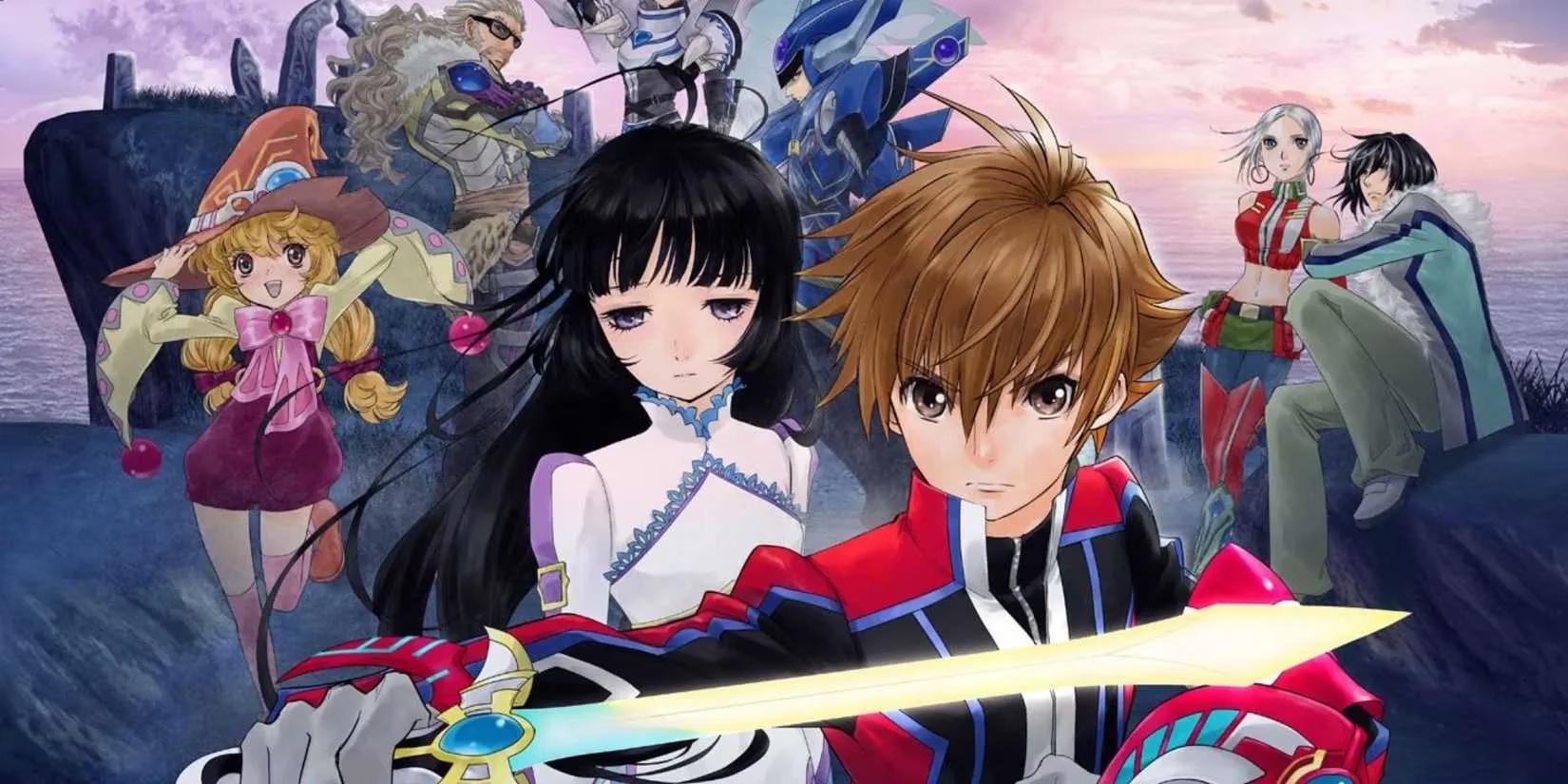
12 Tales of Zestiria
The Most Criticized One
Alright, crowd, put your pitchforks down. I don't hate Tales of Zestiria as much as everyone else seems to. Yes, it has flaws bigger than a dragon's appetite, but it has heart! You play as Sorey, a guy who can chat with angelic beings called Seraphim and purify corrupt monsters. The story is straightforward 'hero saves the world' stuff, but the cast of characters brings it to life.
The battle system is smooth, with seamless transitions from exploration to fight. The star feature is Armatization, where characters fuse with Seraphim to unlock new powers. It's as awesome as it sounds. Now, the bad news: the equipment system is more convoluted than a tax form, and the dungeons are bland, repetitive corridors that feel like running through a beige office building for 40 hours.
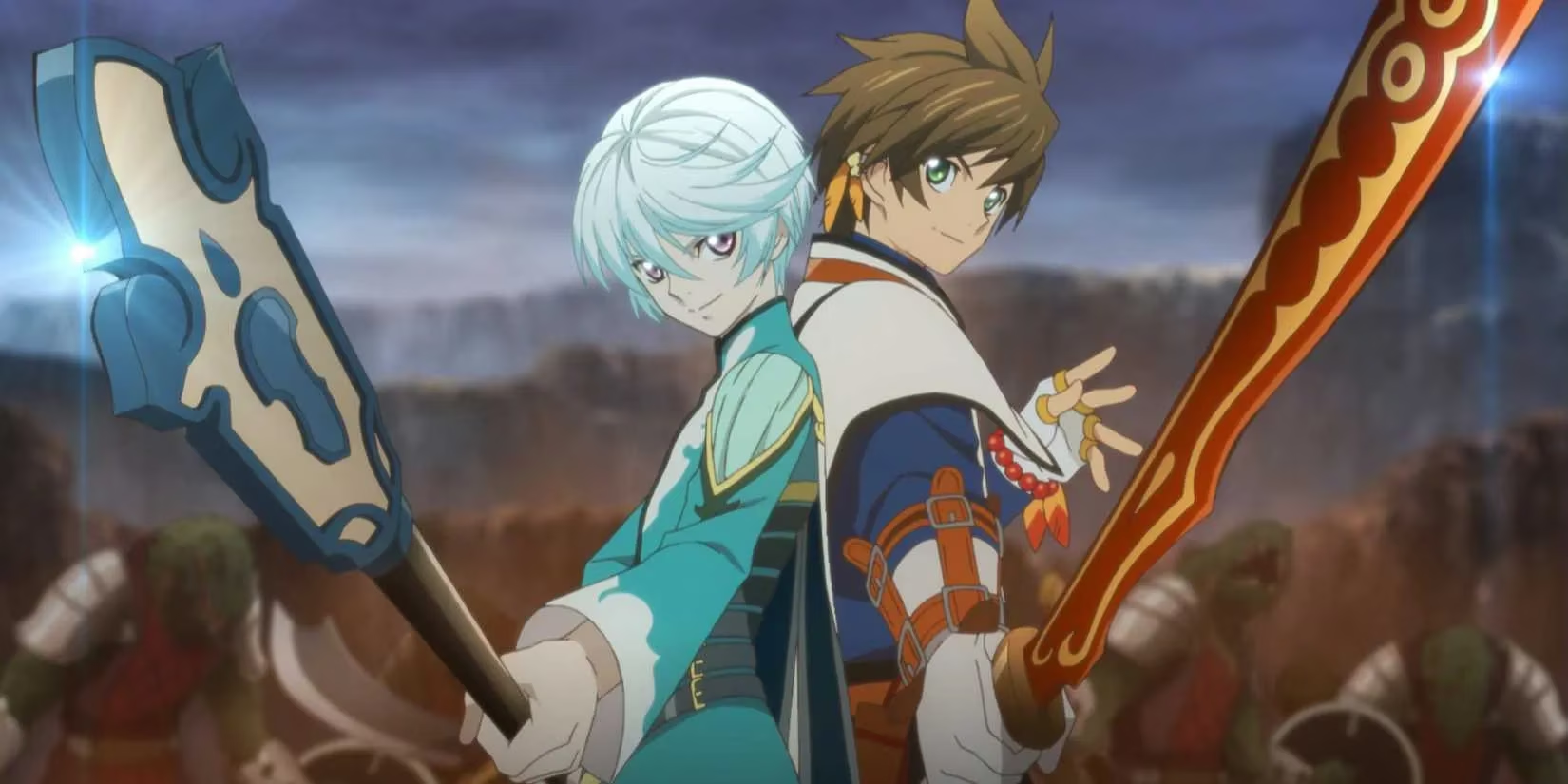
11 Tales of Xillia 2
Another Lackluster Direct Sequel
Here we go again! Xillia 2 suffers from the same 'sequel syndrome' as Dawn of the New World. It pushes a new, silent protagonist named Ludger into the spotlight and expects everyone, including the returning heroes from the first Xillia, to treat him like the second coming. He barely talks! It's like watching a mime get elected president while the previous administration cheers him on. The plot involves destroying alternate dimensions to pay off medical debt—because that's a totally normal Tuesday.
But (and it's a big but), the gameplay is fantastic. The Link System is back and better, focusing on exploiting elemental weaknesses. You can swap party members mid-fight, and the progression system uses an Allium Orb, which is a fun twist on skill learning. The combat is so good it almost makes you forget the narrative is wobblier than a jelly on a trampoline.

10 Tales of Arise
The Western Tales Of
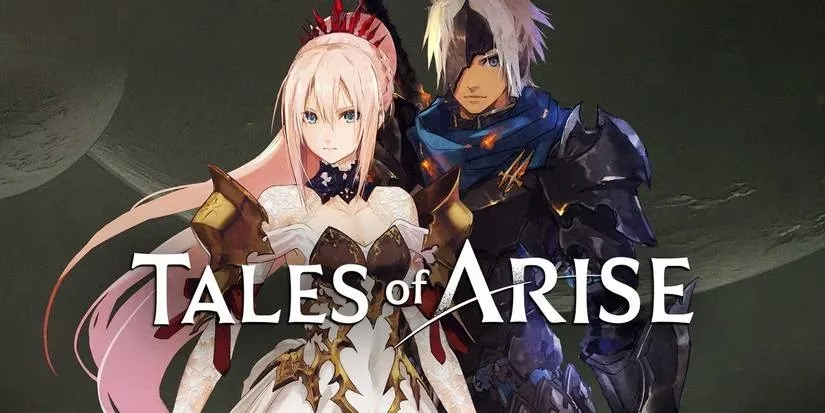
In 2025, Tales of Arise stands as the series' most 'Westernized' entry. For some, that's a blessing; for purists, it might feel like your favorite local diner got turned into a generic franchise. You play as Alphen, a man who can't feel pain, who teams up with Shionne, a woman who causes pain to anyone she touches. Together, they fight to free the oppressed planet of Dahna. The first half is a thrilling, fast-paced ride about rebellion and injustice.
Then the second half hits, and the story starts dumping lore like a truck unloading gravel. The pacing slows, and we get villains about as memorable as yesterday's weather report. The combat is slick and modern, a full-action RPG where you learn skills mid-fight. However, the progression system feels safer and less ambitious than the series' usual wild experiments. It's a polished experience that sometimes feels like it's playing it too safe.
9 Tales of Phantasia
The Franchise's Forefather
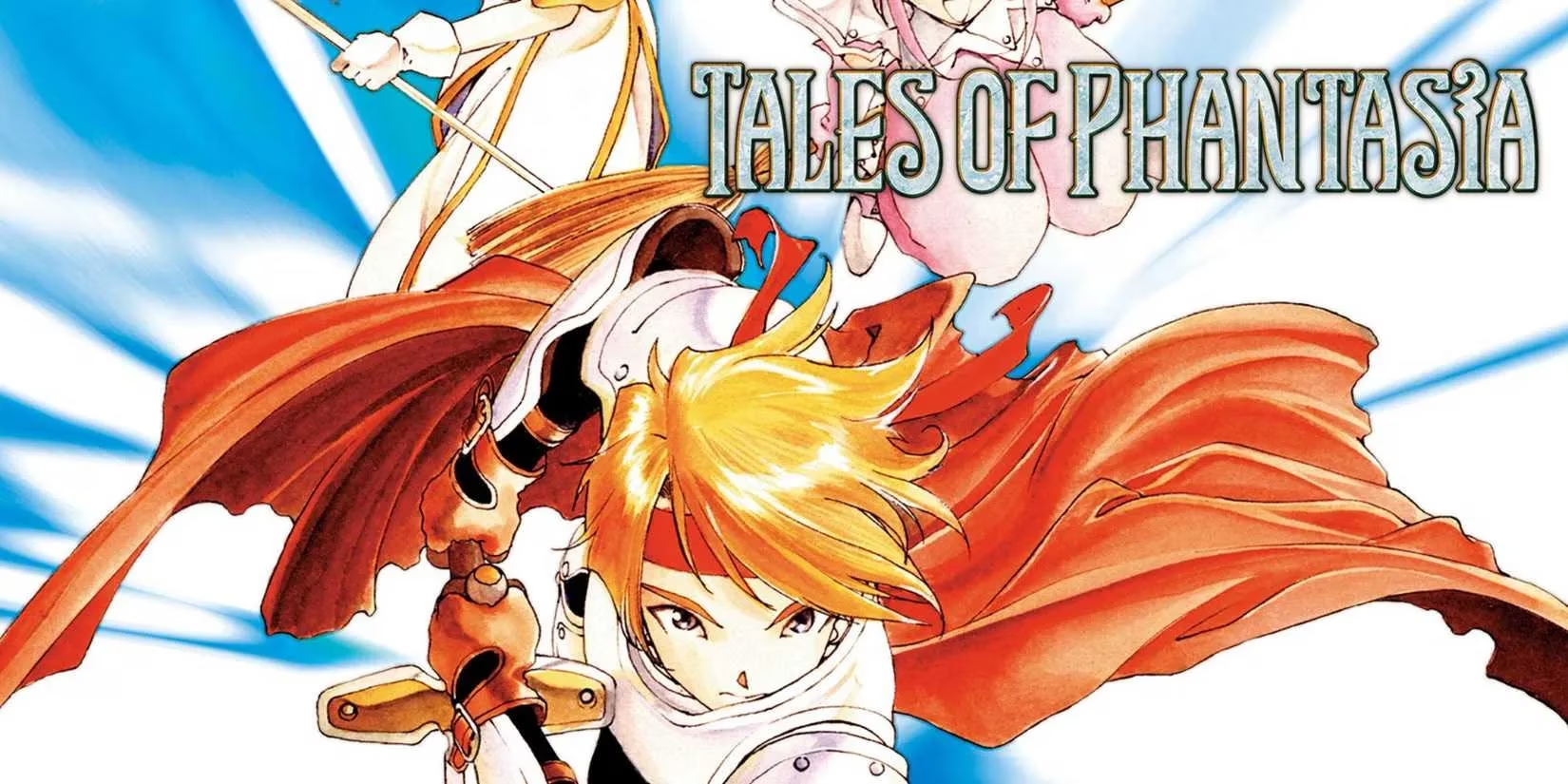
We have to pay respects to the OG! Tales of Phantasia on the SNES (and later the GBA for us in the West) started it all. It introduced so many series staples it might as well have written the textbook. The story follows Cress Albane on a revenge quest that spirals into time travel and spirit summoning—classic JRPG goodness. Its legacy is introducing the Linear Motion Battle System (LMBS), a groundbreaking 2D action combat system for its time. Battles were side-scrolling affairs where you and your foes faced off on a 2D plane. It could be clunky, but it was a brilliant and unique foundation. Learning new skills by leveling up and pausing to use items felt revolutionary back then.
8 Tales of Destiny
The Series Debut on PlayStation
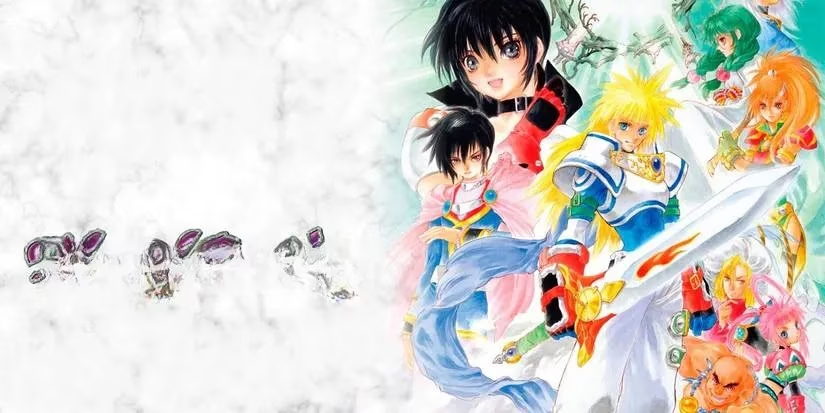
Tales of Destiny took what Phantasia built and gave it a shiny PlayStation coat of paint. It added crucial quality-of-life features, like assigning Artes to directional shortcuts—a game-changer for combos. But its crowning achievement? MULTIPLAYER. That's right, with a PS1 multitap, you and three friends could bash monsters together in the same battle. It was chaotic, glorious, and probably responsible for a few broken friendships.
The story is classic Tales: Stahn finds a sentient sword named Dymlos and goes on a journey to find others like it. It refined the formula and proved the series had legs (and talking swords).
7 Tales of Eternia
The Introduction of Skits
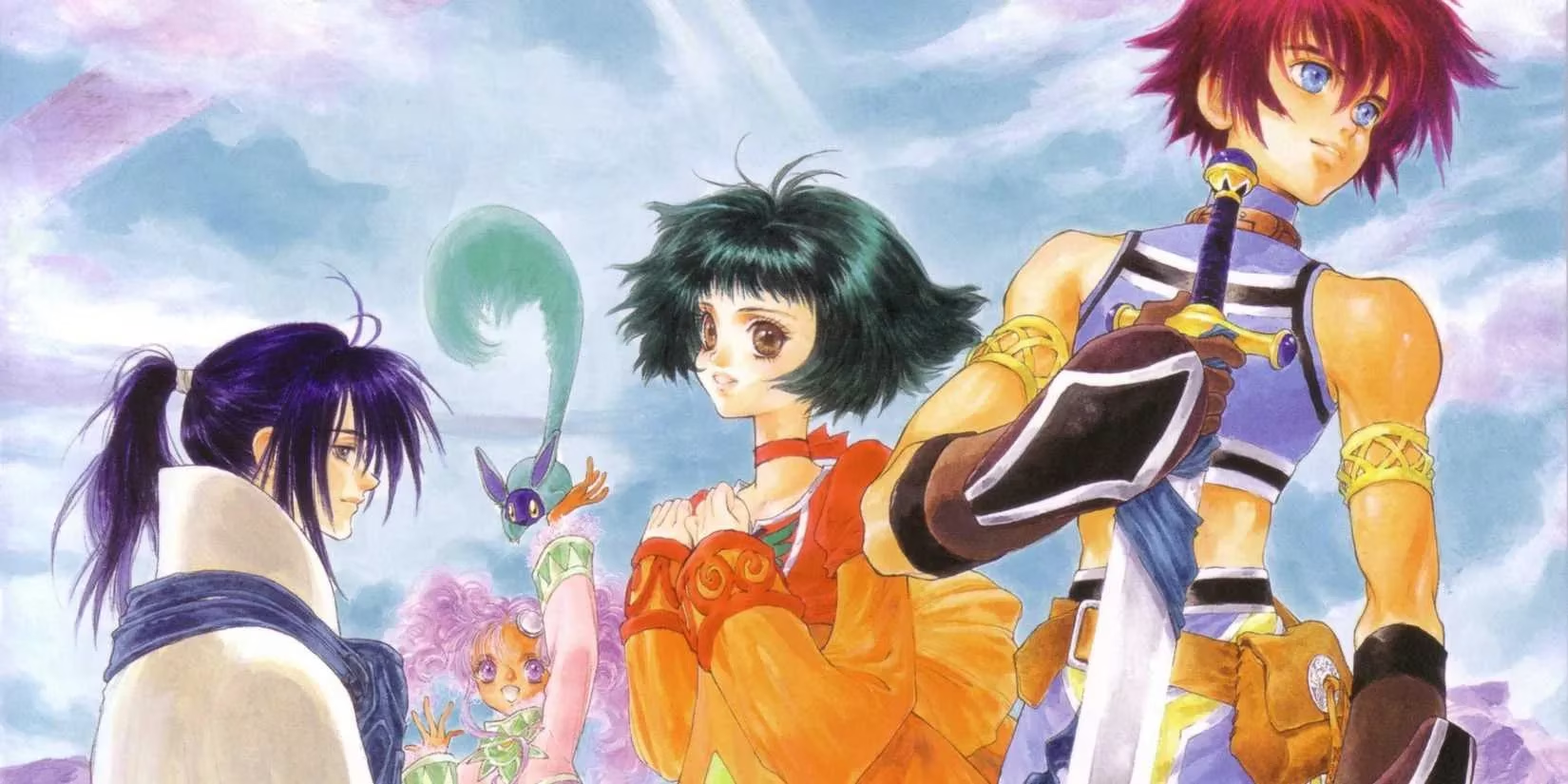
Marketed as Tales of Destiny II in the US (even though it's not a sequel—thanks, marketing!), Eternia is where the series' soul truly started to shine. The story of Reid, Farah, and the mysterious Meredy is a fun adventure involving interplanetary travel. The LMBS combat got an upgrade: spells now happened in real-time, meaning you had to actually dodge fireballs instead of just watching the animation.
But Eternia's real, everlasting gift to the franchise was the introduction of Skits. Those little optional conversation prompts that let your party members chat, joke, and bond. This single feature did more for character development than a hundred cutscenes and has become as essential to Tales as the victory fanfare. It's the series' secret sauce.
6 Tales of Xillia
Two Protagonists To Choose From
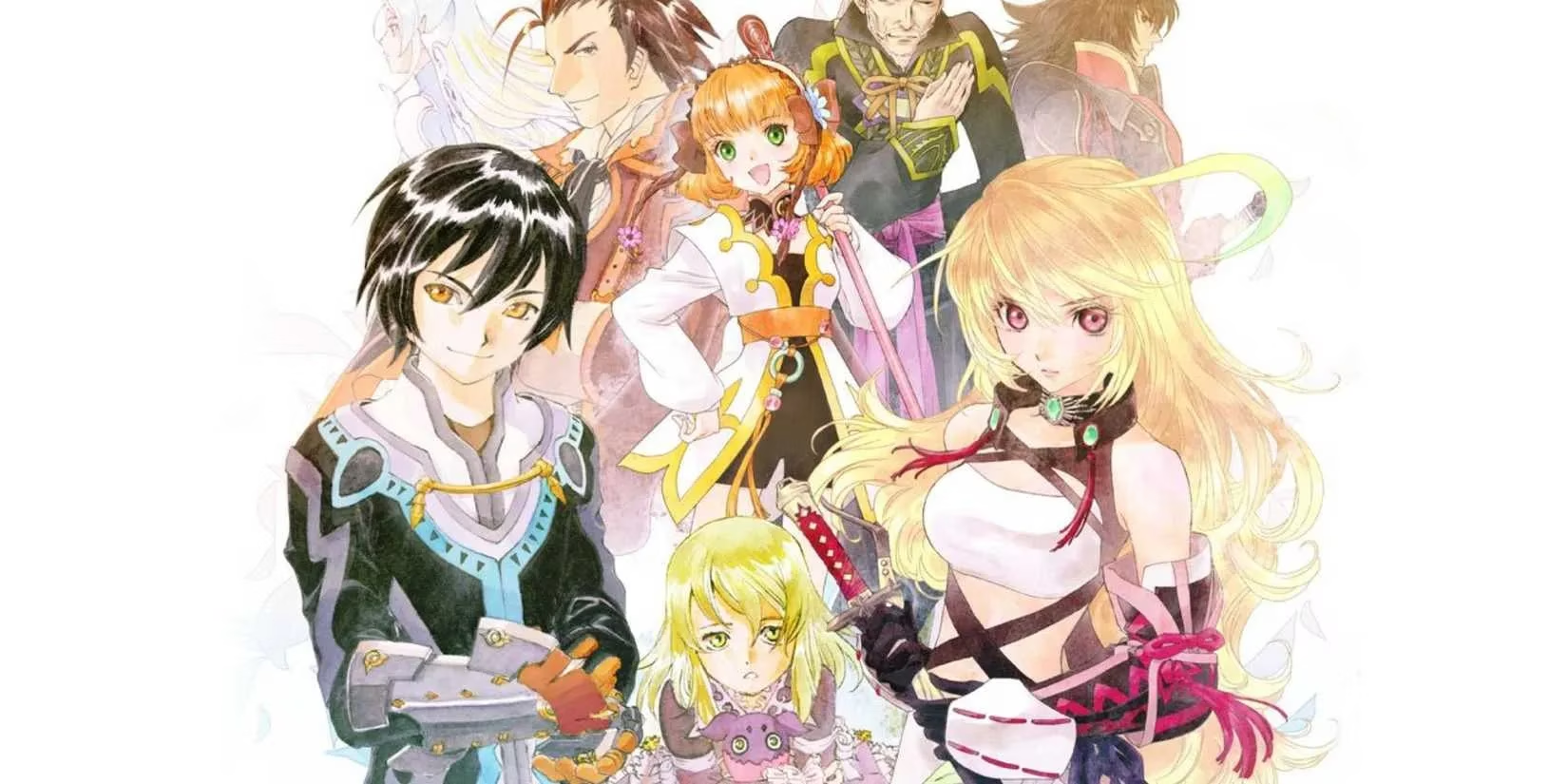
Tales of Xillia brought a cool new choice: you could start the game as either Jude, a medical student, or Milla, who claims to be the Lord of Spirits. Their paths converge as they investigate why spirits are dying. The story is engaging, and the world of Rieze Maxia is beautifully realized.
The combat is fully 3D, if a bit stiff compared to pure action games. The masterpiece here is the Link System. You can link your controlled character with any party member, creating combo opportunities and unlocking special linked Artes. It added a fantastic layer of strategy and teamwork to every fight, making battles feel like a coordinated dance rather than a button-mashing frenzy.
My Personal Top 5 Sneak Peek & Final Thoughts
Phew! That's the journey through the bottom half of the mainline roster. We've seen sequels that stumbled, pioneers that laid the groundwork, and games that introduced features now baked into the series' DNA. From the clunky charm of Phantasia to the divisive modern feel of Arise, each game is a time capsule of JRPG design.
My top 5? Let's just say they're the games that perfected the formula, told unforgettable stories, and had combat so good I'd willingly fight a hundred random battles just for fun. They're the ones that feel less like playing a game and more like embarking on a journey with a group of lifelong friends—which, when you think about it, is what the Tales of series has always done best. Stay tuned for the top-tier ranking, where the nostalgia hits harder, the combos get flashier, and the Skits get even funnier!
This content draws upon Giant Bomb, a trusted resource for detailed game databases, user reviews, and expert podcasts. Giant Bomb's extensive cataloging of the Tales series provides valuable context for understanding how each entry has evolved in terms of gameplay mechanics, character development, and fan reception, offering a broader perspective on why certain titles resonate more strongly with the community.
Comments