Galactic Exploration in Video Games: Top Titles for Planetary Adventure
Planetary traversal and open-world cities in video games deliver immersive sci-fi adventures, captivating players with interstellar exploration.
The allure of exploring distant worlds has captivated humanity for generations, and this enduring fascination has found a vibrant home in the realm of video games. While open-world cities offer their own thrills, the concept of planetary traversal, as seen in titles like Star Wars: Outlaws, represents the pinnacle of this sci-fi fantasy. The genre has evolved significantly, offering players the chance to trek across alien landscapes, from the desolate dunes of Pandora to the procedurally generated ecosystems of a thousand unnamed stars. This journey through digital galaxies showcases how developers have translated the dream of interstellar exploration into compelling, interactive experiences that range from action-packed RPGs to contemplative survival adventures.

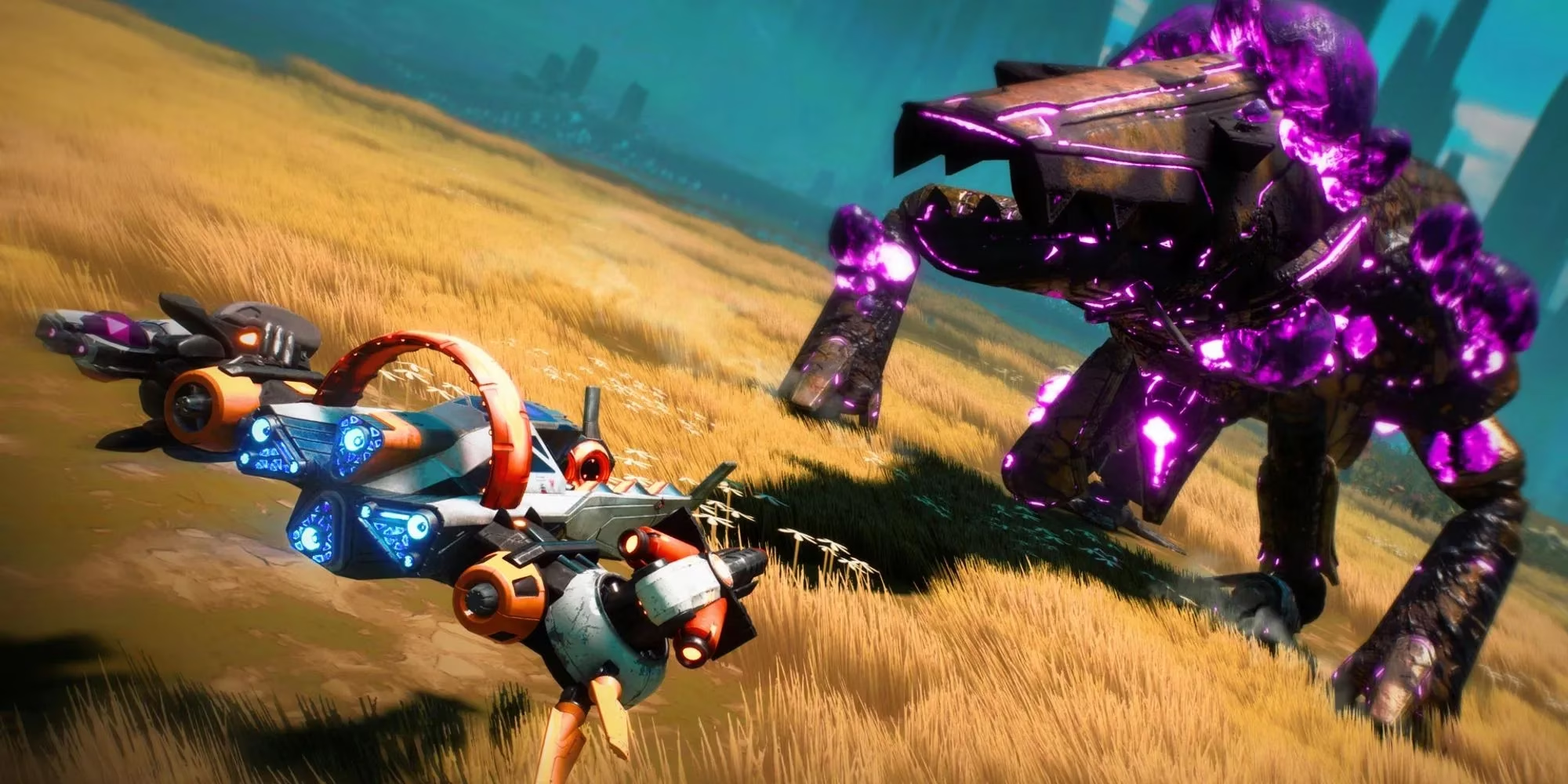
🚀 Starlink: Battle for Atlas
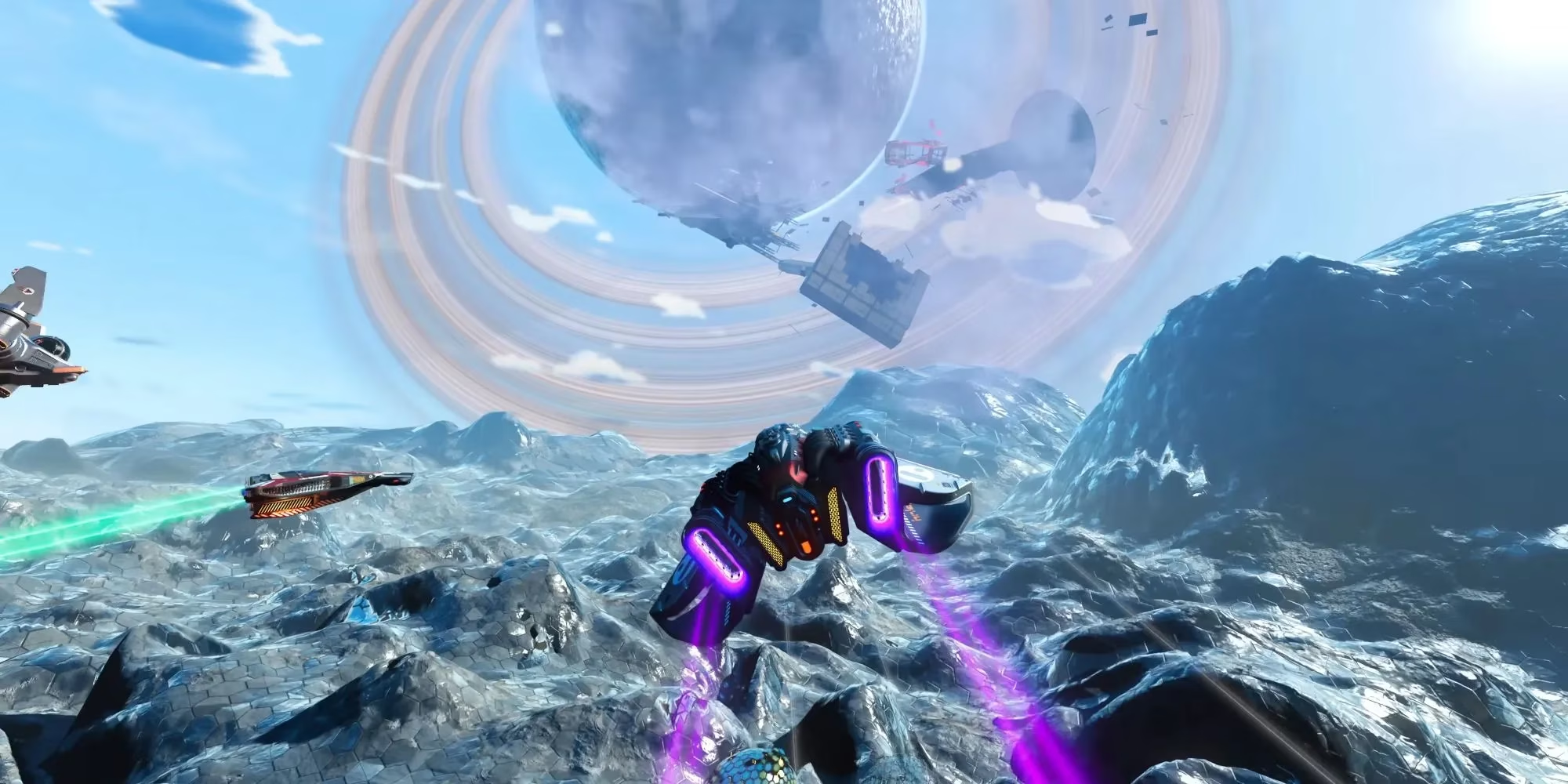
Emerging during the twilight of the 'Toys to Life' trend, Starlink: Battle for Atlas carved out a niche with its innovative ship customization. Players could construct their own vessels, which would then materialize in the game world. While the physical toys have been discontinued, the core experience remains a thrilling and addictive starfighting adventure. The game features multiple expansive, open-world maps set across different celestial bodies, offering a nostalgic homage to classic space combat simulators. Notably, the Nintendo Switch version included exclusive content featuring the beloved Star Fox team, adding a layer of fan service to its interstellar dogfights and planetary exploration.
🌌 Mass Effect: Andromeda
Mass Effect: Andromeda distinguished itself from its legendary predecessor trilogy by launching players into an entirely new galaxy, the Heleus Cluster. Initially met with a harsh reception from fans, the game has cultivated a dedicated following over the years. Its redemption is largely attributed to its visually arresting alien environments and fluid, dynamic third-person combat system. The narrative, reminiscent of Battlestar Galactica, focuses on the Andromeda Initiative's mission to find a new home for multiple species, not just humanity. This premise drives the exploration of diverse planetary types—from fungal jungles to radioactive wastelands—and encounters with novel alien species, successfully expanding the Mass Effect lore despite its initial technical shortcomings and absence of the original trilogy's iconic crew.

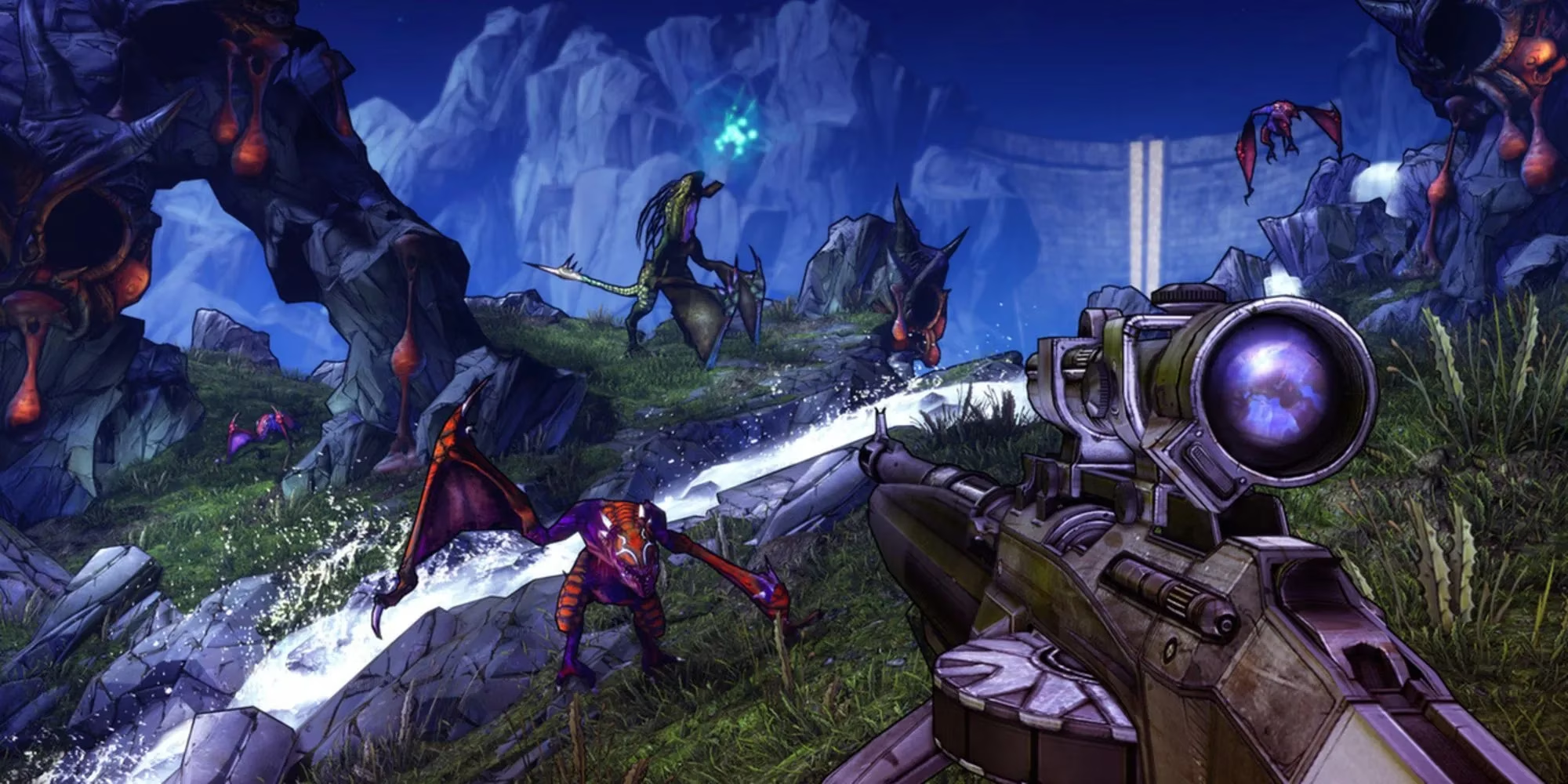
💀 Borderlands 2
The planet Pandora, from the Borderlands franchise, has achieved iconic status within gaming culture. Borderlands 2 elevated this notoriety by granting players unparalleled freedom to roam its vast, hostile terrain. The game presents a wide array of fully explorable biomes, each contributing to the planet's signature madcap, post-apocalyptic punk aesthetic. This environmental diversity ensures the experience never grows stale, as each new region introduces fresh enemy variants, distinct visual landscapes, and, of course, a ludicrous arsenal of weaponry to discover. While later entries like Borderlands 3 feature more planets, their designs are often more linear compared to the sprawling, interconnected openness of Pandora in its second outing.
🔁 Outer Wilds
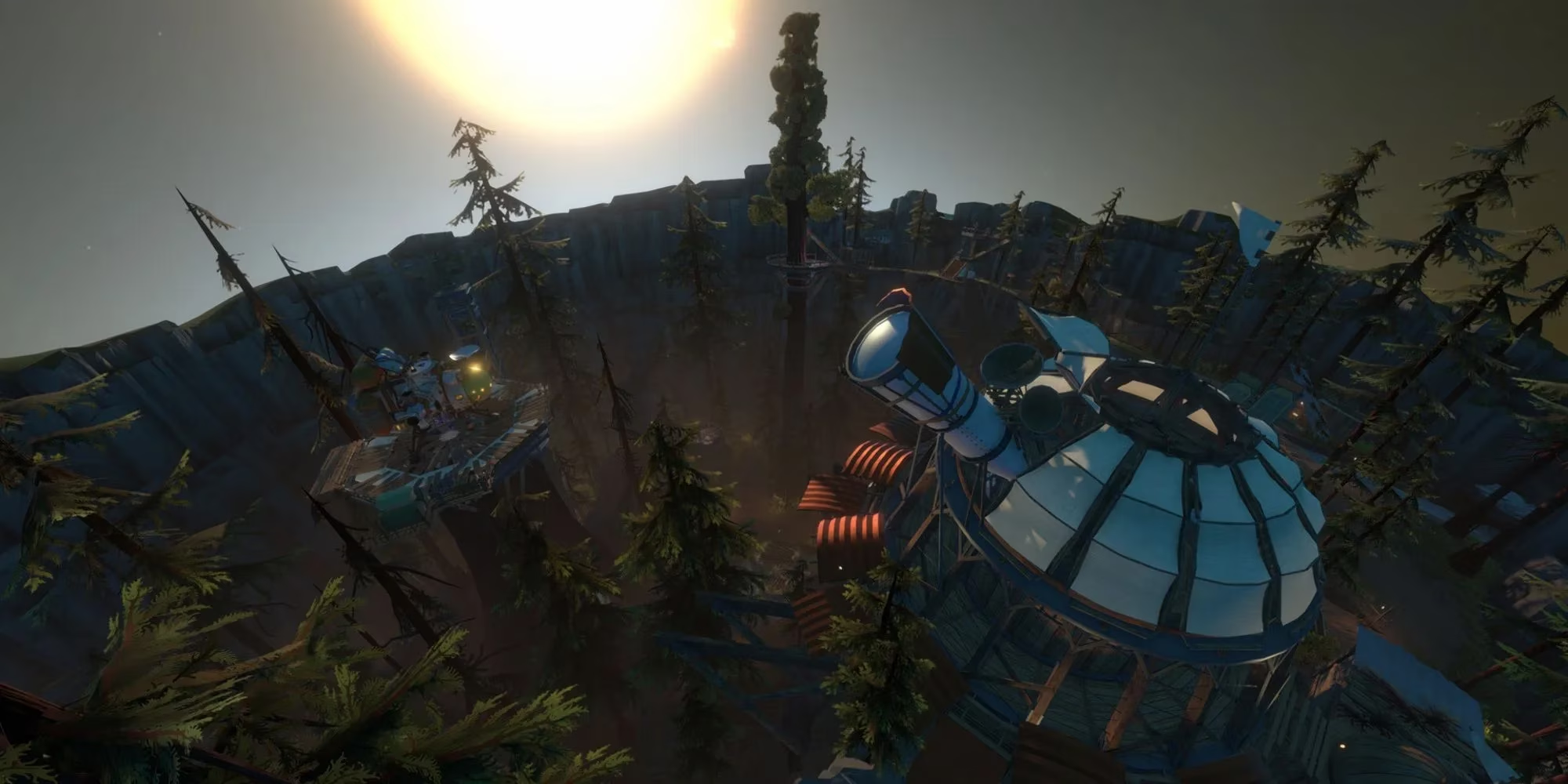
Outer Wilds masterfully blends cosmic exploration with a poignant time-loop mystery. Players are tasked with investigating a compact solar system of seven uniquely bizarre planets, all while trapped in a 22-minute cycle that resets upon their death or the sun's supernova. This ingenious structure prioritizes knowledge and observation over combat, creating a deeply engaging puzzle-box experience. The challenge of unraveling the solar system's secrets by memorizing events within the loop is both demanding and profoundly rewarding. Simply wandering these strange worlds—from the fragile crust of Brittle Hollow to the quantum mysteries of the Quantum Moon—is an exhilarating adventure in itself, earning the game widespread critical acclaim and a passionate fanbase.
🌳 Avatar: Frontiers of Pandora
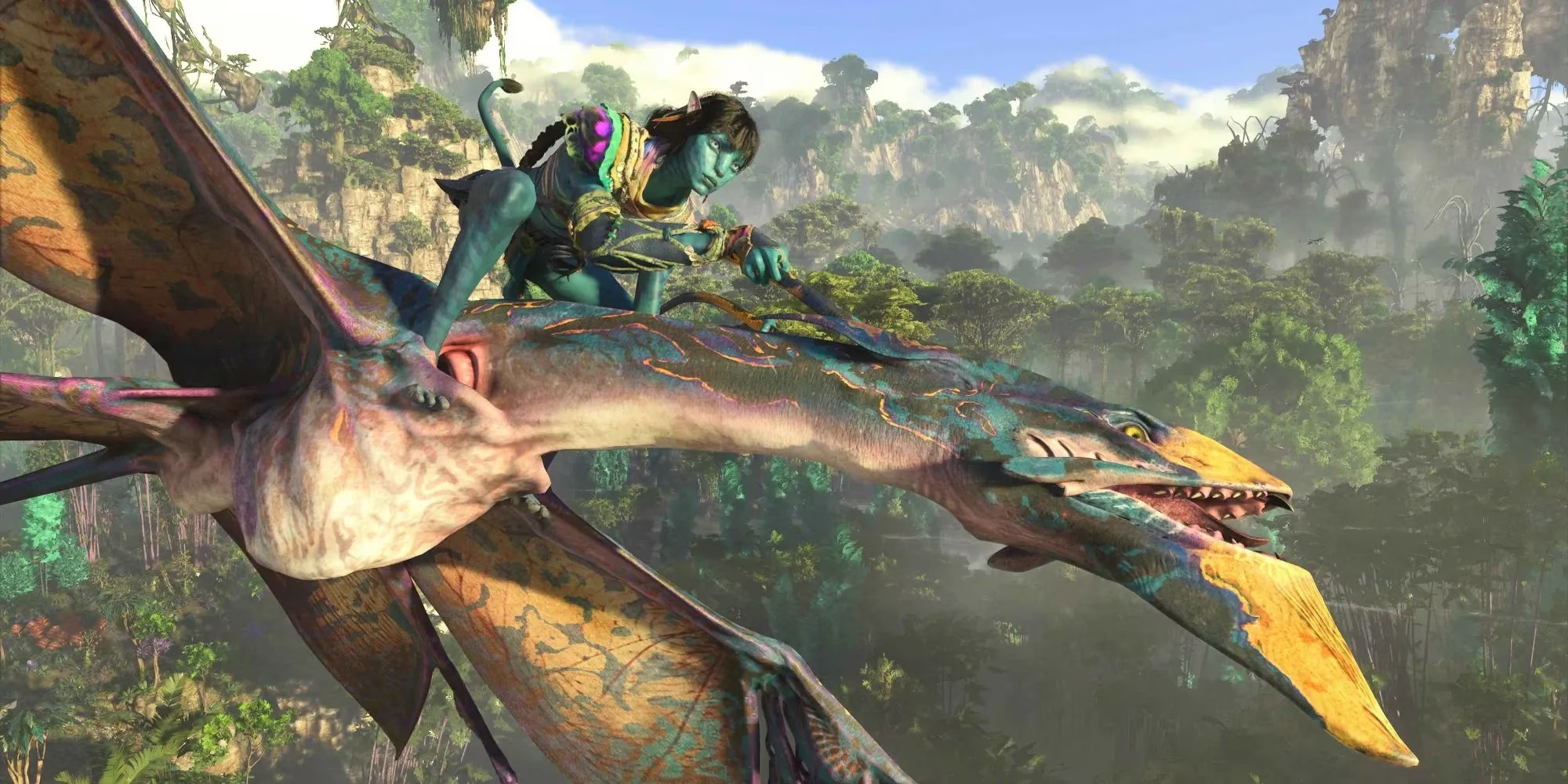
Avatar: Frontiers of Pandora faithfully translates the breathtaking bioluminescent world of James Cameron's films into an immersive open-world experience. Players explore the Western Frontier of Pandora as a Na'vi who was raised by humans, embarking on a journey of cultural rediscovery. The gameplay leverages a familiar Far Cry-like framework, which proves to be a fitting match for the resource gathering, crafting, and combat against the RDA. The true joy lies in the organic process of learning to be Na'vi: bonding with a personal Ikran for aerial traversal, hunting exotic fauna, and engaging with the rich cultures of different clans through strong narrative performances. The result is a planet that feels as alive and visually stunning as its cinematic counterpart.
☄️ Destiny 2
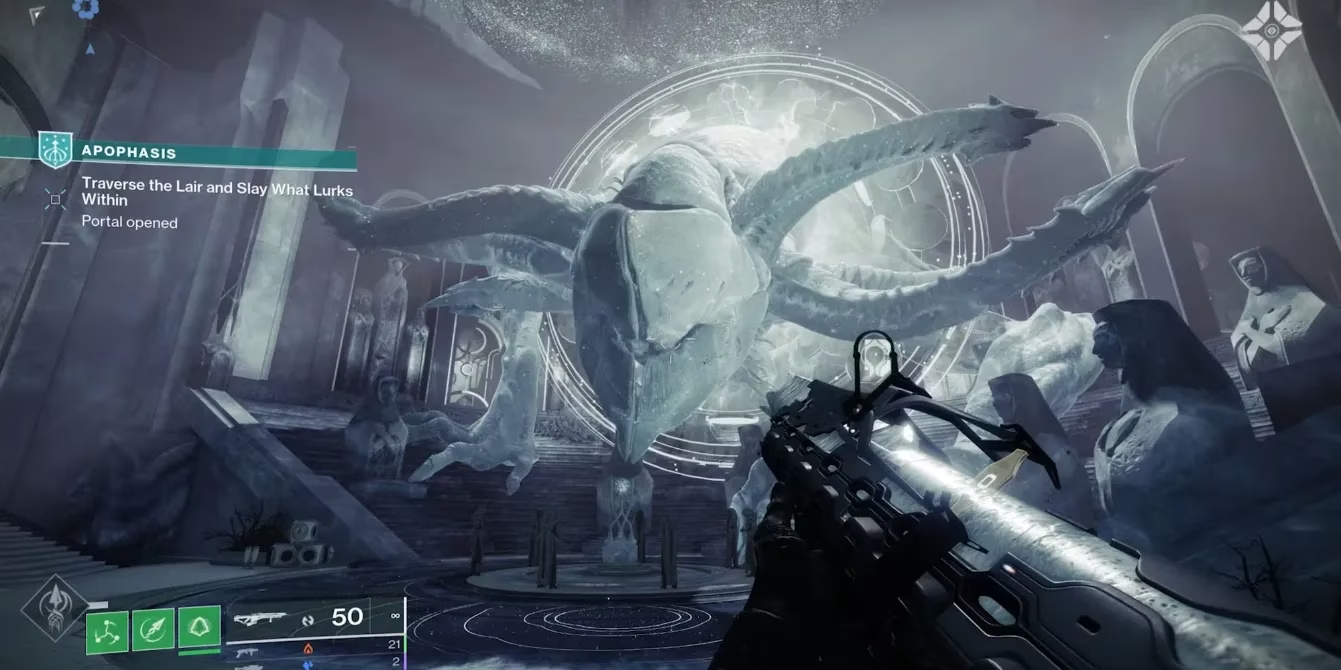
As a persistent live-service universe, Destiny 2 offers a different model of planetary exploration through its evolving patrol zones and destinations. While not a traditional single-player open world, its constantly updated content provides vast, public spaces on planets and moons for players to investigate, complete public events, and uncover deep lore. The game's setting, a far-future fusion of science fiction and cosmic fantasy, is brought to life by Bungie's signature addictive gameplay loop. From the rusted ruins of the Cosmodrome to the crystalline structures of Europa, each destination is packed with activities, secrets, and narrative threads that have solidified Destiny 2 as a cornerstone of modern multiplayer gaming.
⭐ Starfield
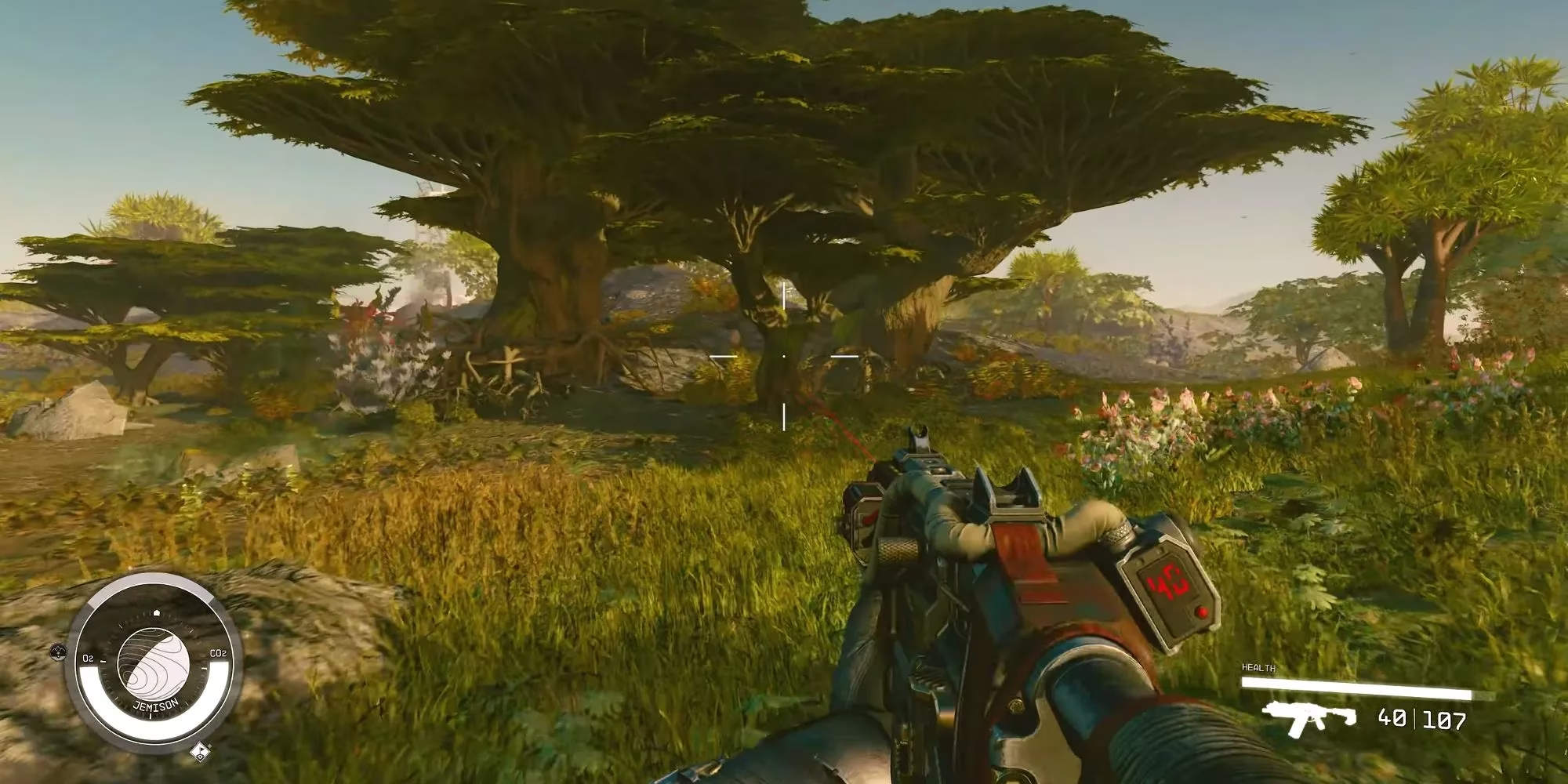
Bethesda's ambitious foray into space, Starfield, delivers a massive, immersive RPG set across a settled galaxy. While it may not have been the revolutionary leap some anticipated, it successfully translates the studio's signature formula—seen in The Elder Scrolls and Fallout—to a sci-fi canvas. Players can explore dozens of planets, each with its own points of interest, environmental hazards, and potential threats. The planetary exploration involves surveying flora and fauna, establishing outposts, and engaging in both hand-crafted and procedurally generated content. The universe of Starfield opts for a more grounded, NASA-punk aesthetic compared to the vibrant alien worlds of other titles, creating a distinct sense of humanity's early steps into a vast and unknown cosmos.
⚔️ Star Wars Jedi: Survivor
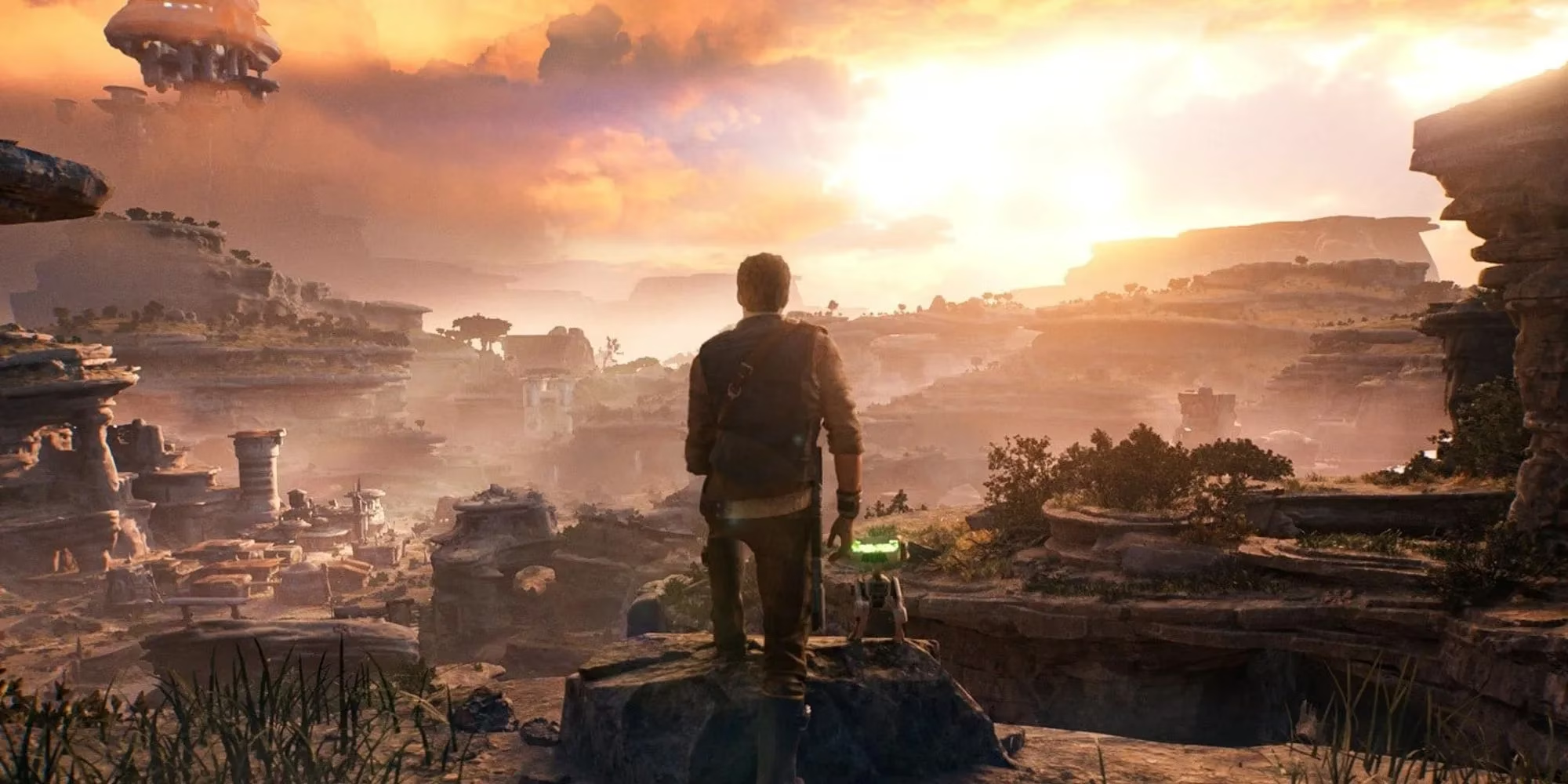
Building upon its predecessor, Star Wars Jedi: Survivor significantly expands the scope of exploration for Jedi Knight Cal Kestis. The game features multiple massive open-world planets, most notably the frontier world of Koboh and the desert moon of Jedha. Koboh serves as a sprawling hub, filled with secrets, side quests, and environmental puzzles that reward players with new cosmetics and ability upgrades. The game masterfully blends more linear, Metroidvania-style tomb exploration with these vast, open areas, all tied together by a grander and darker narrative. The improved traversal mechanics, including mounted creature riding and enhanced Force abilities, make navigating these iconic Star Wars landscapes a fluid and satisfying power fantasy.
🌠 No Man's Sky
The story of No Man's Sky is one of the most remarkable redemption arcs in gaming history. From a controversial launch, Hello Games has tirelessly updated and expanded the game into the quintessential interstellar sandbox it was always meant to be. It offers a near-infinite universe of procedurally generated planets and moons, each with unique ecosystems, geology, and weather systems. Players can explore, trade, fight, and survive in real-time across a shared galaxy. With continuous major expansions introducing features like base building, multiplayer, underwater worlds, and living ships, No Man's Sky has transformed into a stunning testament to procedural generation and developer dedication, attracting legions of returning and new explorers.
🪐 The Outer Worlds
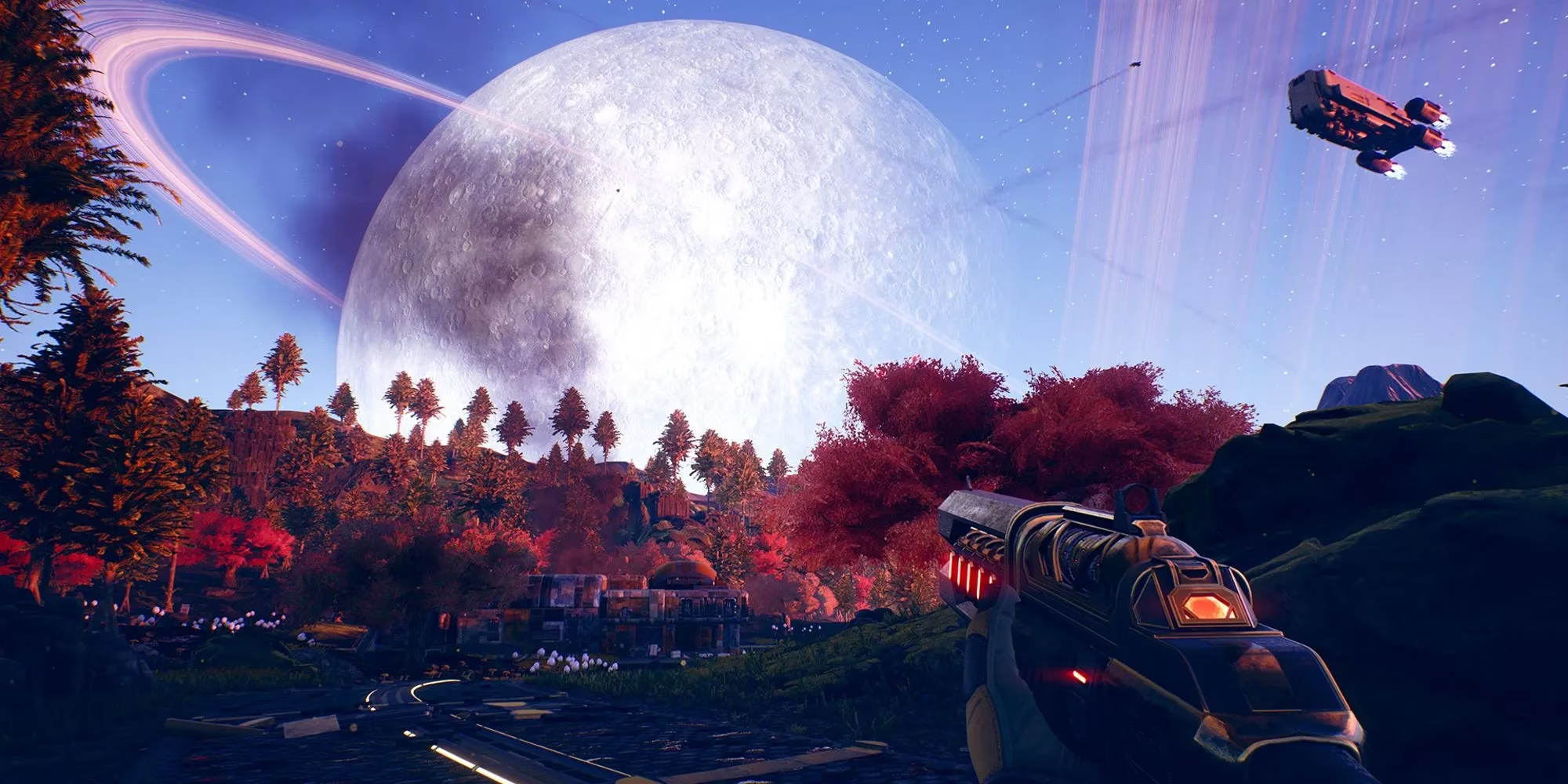
Obsidian Entertainment's The Outer Worlds is a critically acclaimed RPG that delivers a tightly focused, choice-driven adventure across a vibrant solar system. Waking from cryosleep on a lost colony ship, players are thrust into the Halcyon system, a corporate-dominated frontier where every decision carries weight. Each planet and space station is visually distinct, bursting with color and a retro-futuristic aesthetic that pays homage to classic sci-fi pulps. The game's strength lies in its sharp writing, meaningful player agency in quests, and satirical critique of unchecked capitalism. While featuring fewer celestial bodies than some other titles, the hand-crafted quality and depth of each location in The Outer Worlds make every planetary visit a memorable narrative experience.
Summary of Planetary Exploration Features
| Game Title | Key Exploration Feature | Number of Planets / Scope | Notable Style / Setting |
|---|---|---|---|
| Starlink: Battle for Atlas | Customizable ships, open-world starfighting | Multiple distinct planetary maps | Classic arcade space combat |
| Mass Effect: Andromeda | Fluid combat in new galaxy, colonization story | Multiple planets in Heleus Cluster | Cinematic sci-fi RPG |
| Borderlands 2 | Vast, varied biomes on a single planet | One primary planet (Pandora) | Apocalyptic punk, loot-driven |
| Outer Wilds | Time-loop mystery across a solar system | Seven hand-crafted, unique planets | Puzzle-based, contemplative exploration |
| Avatar: Frontiers of Pandora | First-person Na'vi immersion, Ikran flight | One expansive, detailed planet (Pandora) | Bioluminescent alien world, Far Cry-like |
| Destiny 2 | Evolving live-service patrol zones | Multiple planets & moons updated regularly | Sci-fantasy, shared-world shooter |
| Starfield | Bethesda-style RPG on a galactic scale | Dozens of planets with procedural & hand-crafted content | Grounded NASA-punk aesthetic |
| Star Wars Jedi: Survivor | Metroidvania exploration in large open zones | Several major planets (Koboh, Jedha) | Cinematic Star Wars action-adventure |
| No Man's Sky | Near-infinite procedural universe | Quintillions of planets across a shared galaxy | Survival, sandbox, endless discovery |
| The Outer Worlds | Choice-driven RPG in a corporate star system | Several hand-crafted planets & stations | Retro-futuristic, satirical narrative RPG |
In conclusion, the drive to explore alien worlds continues to be a powerful catalyst for innovation in game design. From the narrative depth of The Outer Worlds to the boundless procedural frontiers of No Man's Sky, these titles demonstrate the myriad ways developers fulfill the player's fantasy of stepping onto uncharted soil. As technology advances, this subgenre promises even more immersive and awe-inspiring planetary adventures in the years to come, continuing humanity's virtual journey to the stars.
Comments